
Building an organic skincare routine sounds easy until you start reading the labels. One bottle says certified organic, another says made with organic ingredients, a third belongs to a brand with Organic in its name, while another contains a single plant oil that really is 100% organic even though the rest of the brand has very little to do with organic cosmetics.
That difference matters. Organic describes how eligible ingredients are produced and, when certification is involved, how a product meets a particular standard. It doesn’t tell us automatically whether a formula is gentler, safer, more effective or better suited to a particular skin type. A certified face oil can contain fragrant essential oils. A fragrance-free moisturiser can combine organic plant ingredients with functional ingredients that aren’t agricultural at all. A retinal serum can be certified organic even though retinal itself isn’t something grown on an organic farm.
So we approached this guide as a routine first. We looked at products that can realistically sit together on a bathroom shelf, checked what their organic claims mean, read the ingredient lists and included very different textures and price points. We also kept products that fall just outside the certified-organic category when they make the comparison more useful. Sometimes a one-ingredient natural oil, a NATRUE-certified cream or a sunscreen made with a high percentage of organic ingredients tells us more about the category than another jar carrying exactly the same certification logo.
You’ll find a few caveats along the way. Some formulas contain fragrance components. Some oil-rich products include ingredients found on historical comedogenicity screening lists. Some brands use certified organic ingredients without certifying the finished product. Those distinctions are part of the selection rather than reasons to hide a product from view.
A complete organic skincare routine, step by step
A routine doesn’t improve simply because every possible step has been filled. Most skin still needs the same basic functions whether the products are certified organic or not: cleansing that suits what needs to be removed, enough hydration and emollience for the skin in front of you, targeted treatment when it serves a purpose, and dependable sun protection during the day.
That means you don’t need an organic toner, an essence, three serums and two facial oils to qualify. The products below are building blocks. Some are direct alternatives. Others answer very different preferences within the same step.
Step 1 Start with a cleanser your skin actually tolerates
Organic certification is useful here, but cleansing happens too often for certification to be the only filter. Fragrance, essential oils, the cleansing system, contact time and texture can matter just as much as the percentage of organically farmed ingredients. Even within certified organic skincare, a lightweight wash, a cream cleanser and an oil-rich balm behave very differently.
We chose three options for three different jobs. One is an unusually practical multi-use cleanser that can be shared by the whole family, one is a fragrance-free cream cleanser designed more specifically for the face, and the third is a richer organic balm for make-up and sunscreen removal.
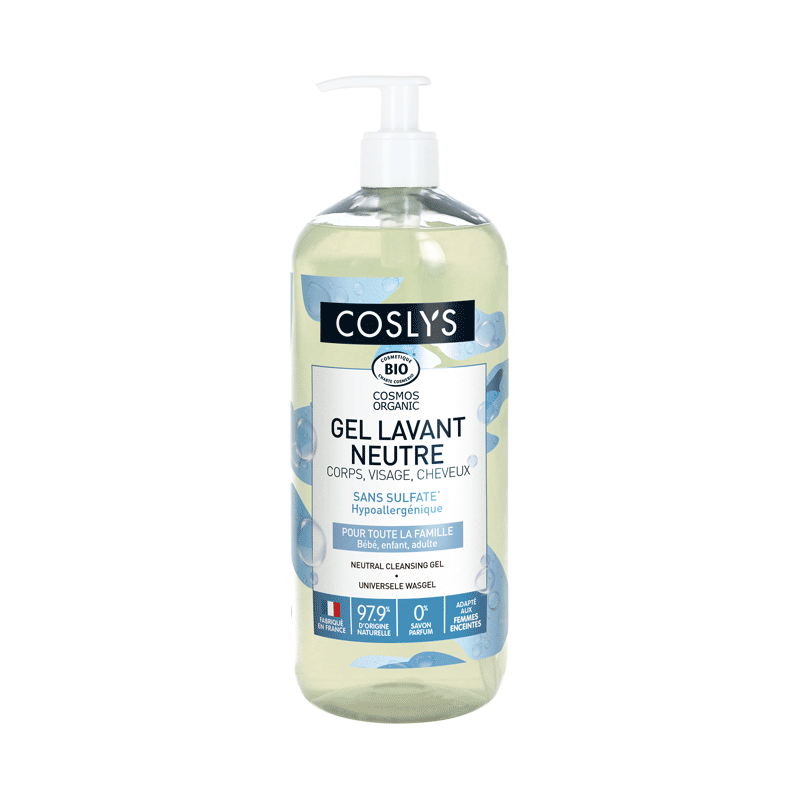
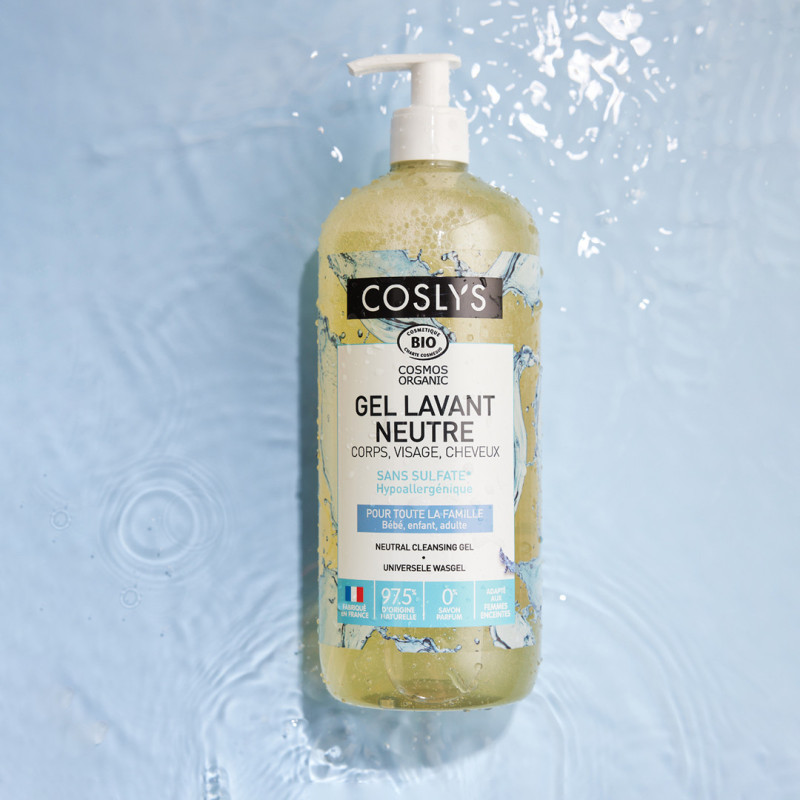
Neutral Cleansing Gel
Coslys Neutral Cleansing Gel may be the most practical starting point of the three. It is COSMOS Organic certified by Ecocert and is made predominantly from ingredients of natural origin. The formula is soap-free, fragrance-free and made without sulphated surfactants, with a relatively straightforward cleansing base supported by glycerin, aloe and orange blossom water.
Its real advantage is versatility. Coslys sells the gel for face, body and hair and states that it is suitable for babies, children and adults, including fragile and sensitive skin. A one-litre bottle can therefore replace several separate cleansing products in a household. That makes it interesting for reasons that have little to do with an aspirational organic-beauty aesthetic. It is simple, economical and easy to use.
Worth knowing: a multi-use wash won’t behave like a dedicated shampoo or a make-up removing balm for everyone. Hair texture, scalp condition, waterproof sunscreen and make-up all change what we ask a cleanser to do. As a low-cost certified organic wash with a relatively short INCI, however, Coslys makes a very strong case.
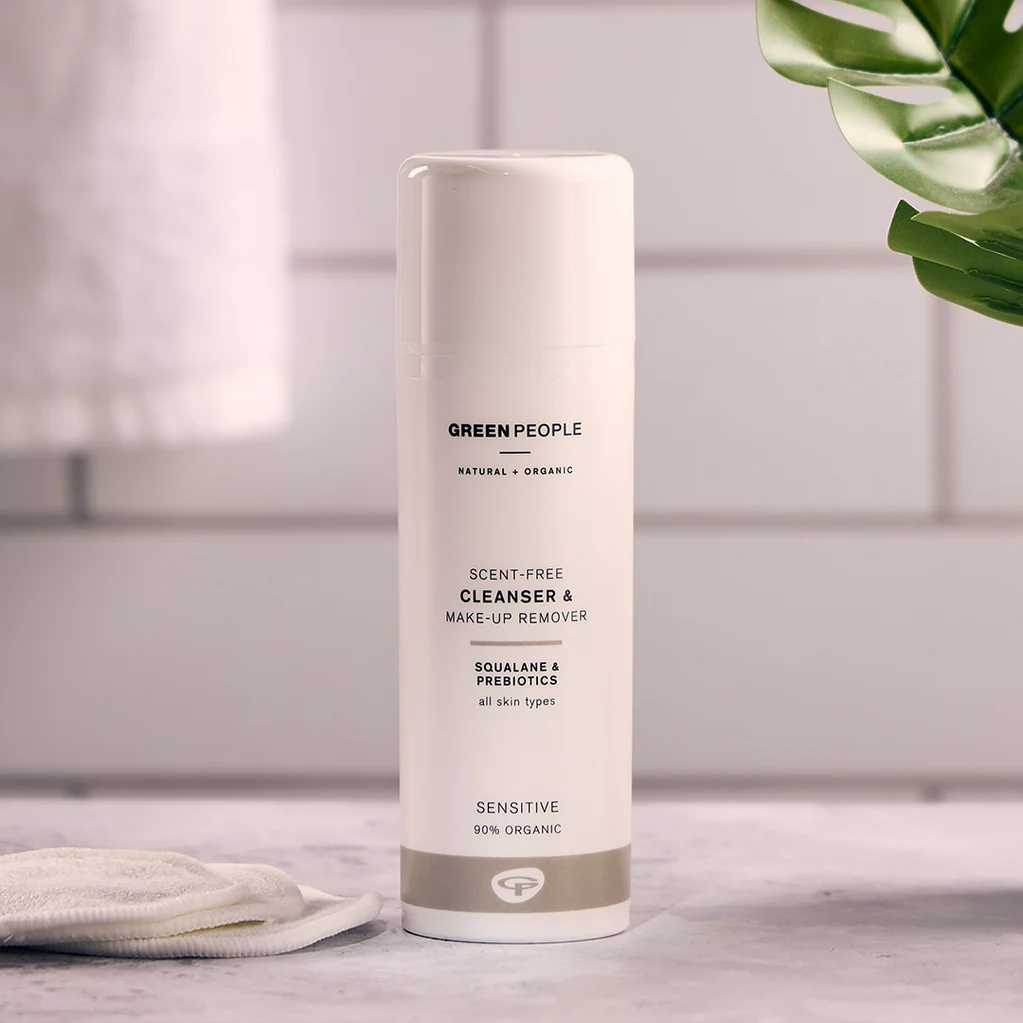

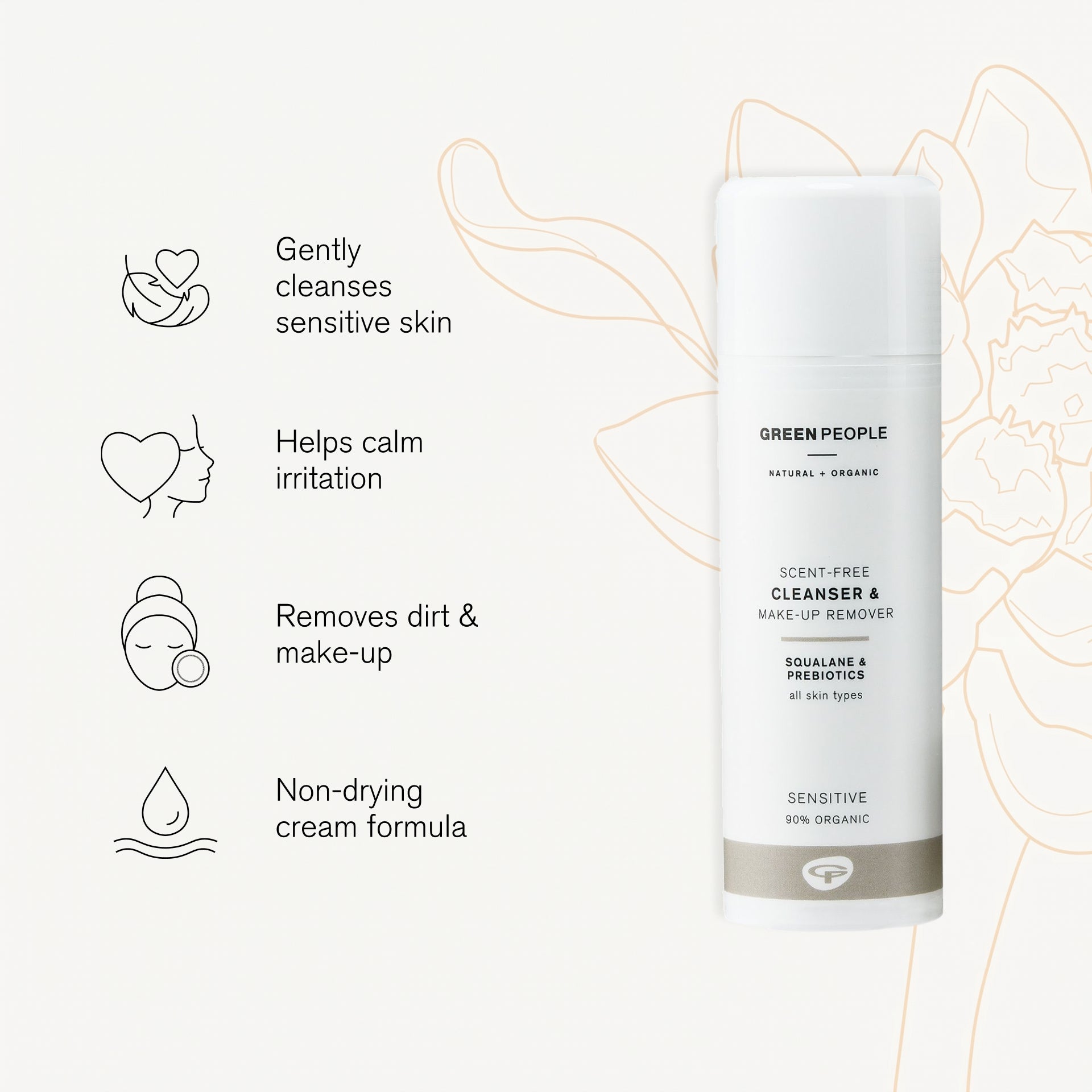

Scent Free Cleanser & Make-Up Remover
If you want something more specifically designed for facial cleansing, Green People Scent Free Cleanser & Make-Up Remover takes a creamier route. It is Soil Association COSMOS Organic certified and Green People formulates it without fragrance or essential oils, positioning it for sensitive, dry and mature skin.
Sunflower oil, shea butter, glycerin, aloe, jojoba, calendula, prebiotic inulin and squalane give the cleanser a much more emollient profile than the Coslys gel. It can be rinsed away or removed with a soft cloth and is intended to handle everyday dirt and make-up without relying on a strongly foaming cleansing system.
Worth knowing: fragrance-free and essential-oil-free does not guarantee universal tolerance, but it removes two common variables that frequently complicate botanical skincare. This is our more face-specific choice if fragrance avoidance is high on your list.
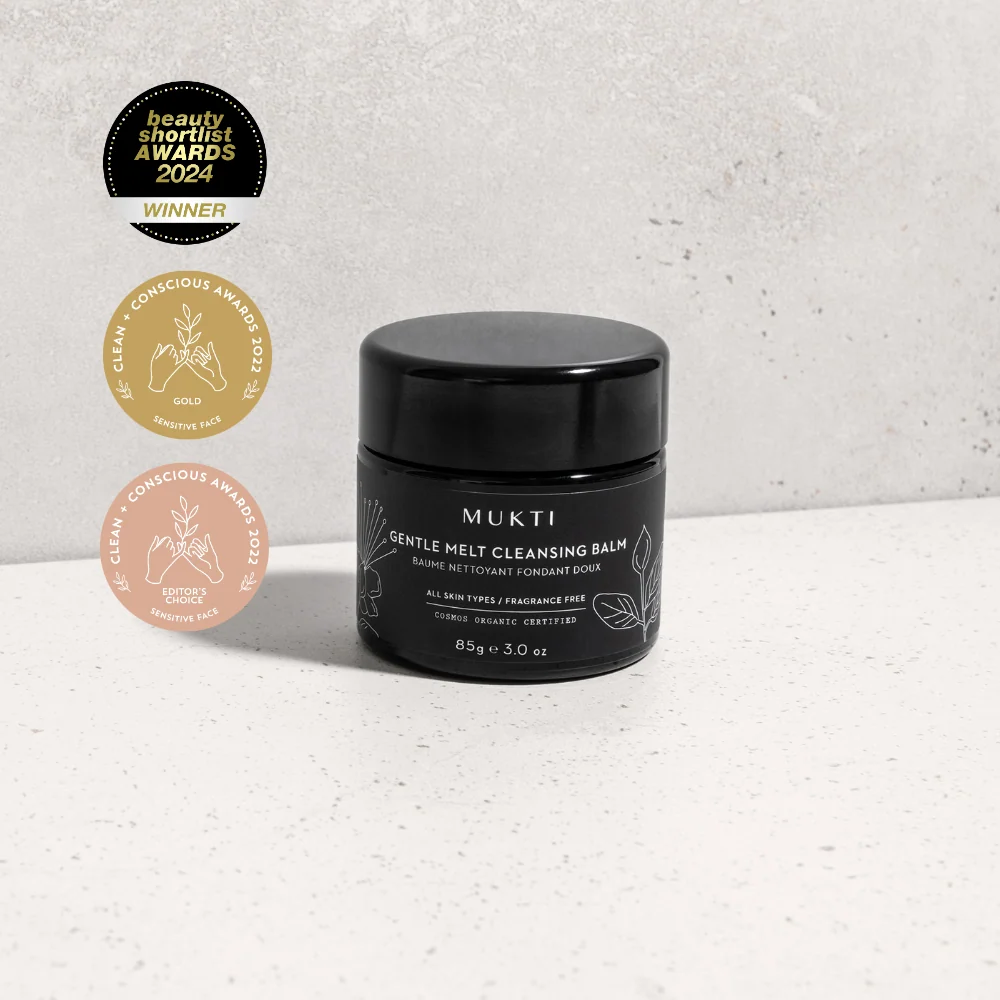
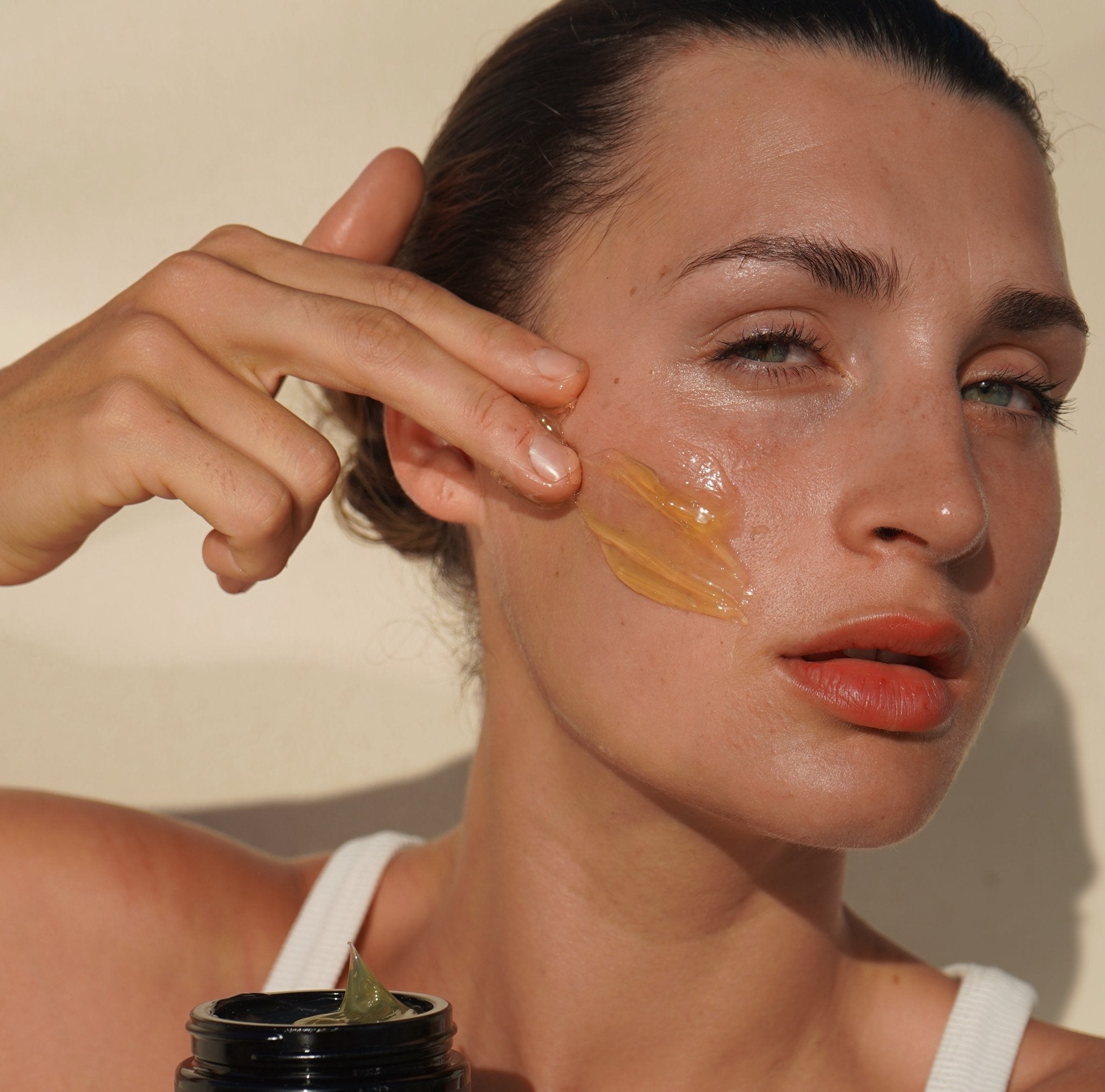

Gentle Melt Cleansing Balm
For a richer first cleanse, Mukti Organics Gentle Melt Cleansing Balm is the luxury option. Mukti declares the formula 100% natural origin and 97.36% organic, with sunflower, sweet almond, jojoba, avocado, argan and chia oils making up much of its base. Sucrose laurate helps the balm turn into a milky emulsion when water is added, making this the most obvious choice of the three for breaking down heavier sunscreen or make-up.
That oil-rich composition introduces another consideration. Some plant oils and fatty materials appear on historical comedogenicity screening lists, and this formula contains sweet almond oil, one of the ingredients flagged by our own reference-list screening. The historical rating does not establish that the finished balm will clog pores. Ingredient-level comedogenicity testing has significant limitations, and a cleanser is also removed from the skin instead of remaining there for hours.6
If you are acne-prone or prefer to screen these ingredients before buying, paste the full INCI into our Pore-Clogging Ingredients Checker. It shows which names match the reference data while keeping an important distinction visible: a match is a screening signal, not a prediction of what the finished cosmetic will do on your skin.
Worth knowing: oils aren’t a single comedogenic category. Different oils have different compositions, and concentration, the complete formula, contact time and rinsing all matter. Mukti still makes sense for someone who specifically wants an oil-rich organic balm. It would not be our first recommendation for someone whose main goal is to minimise every ingredient-level pore-clogging flag.
Step 2 Add hydration, or keep the serum step very simple
This is where organic skincare starts to look much more like contemporary skincare in general. A certified organic serum can contain familiar humectants and modern functional ingredients, while a product marketed as a booster may take the opposite route and contain one plant oil and nothing else.
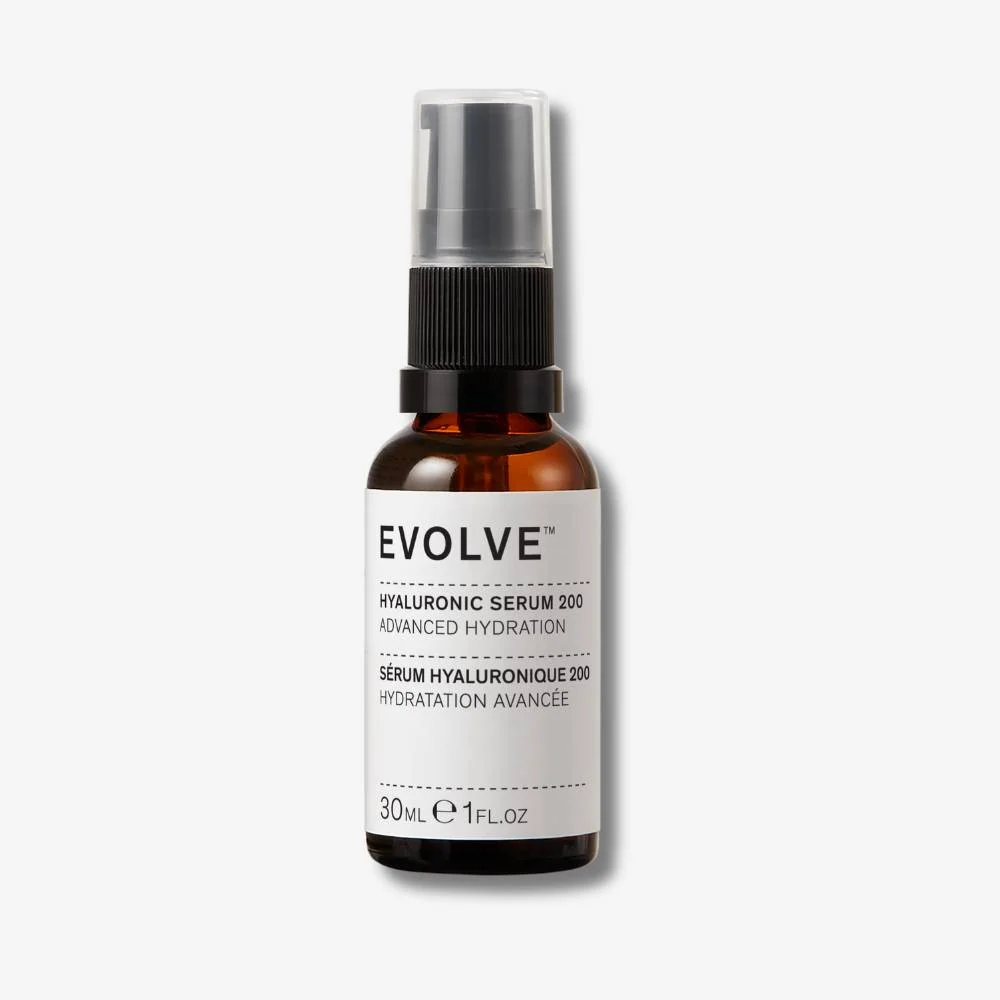


Hyaluronic Serum 200
Evolve Organic Beauty Hyaluronic Serum 200 combines aloe, rose water, glycerin, sodium hyaluronate and pomegranate extract in a lightweight water-based serum. The finished product is COSMOS Organic certified. It is a useful example because its function is immediately familiar even if you have never bought an organic cosmetic before: this is a hydrating serum built around humectancy and water-binding rather than an aromatic facial oil.
The percentages printed on organic cosmetics also need context. Water cannot be organically farmed, and neither is hyaluronic acid an agricultural crop. A modern certified formula can include functional ingredients that comply with a certification standard while the agricultural portion of the product follows its organic requirements.
If your moisturiser already leaves your skin comfortable, a separate hydrating serum may be unnecessary. If you like a light layer under cream, Evolve is one of the clearest examples in this guide of organic certification coexisting with a very conventional modern serum format.
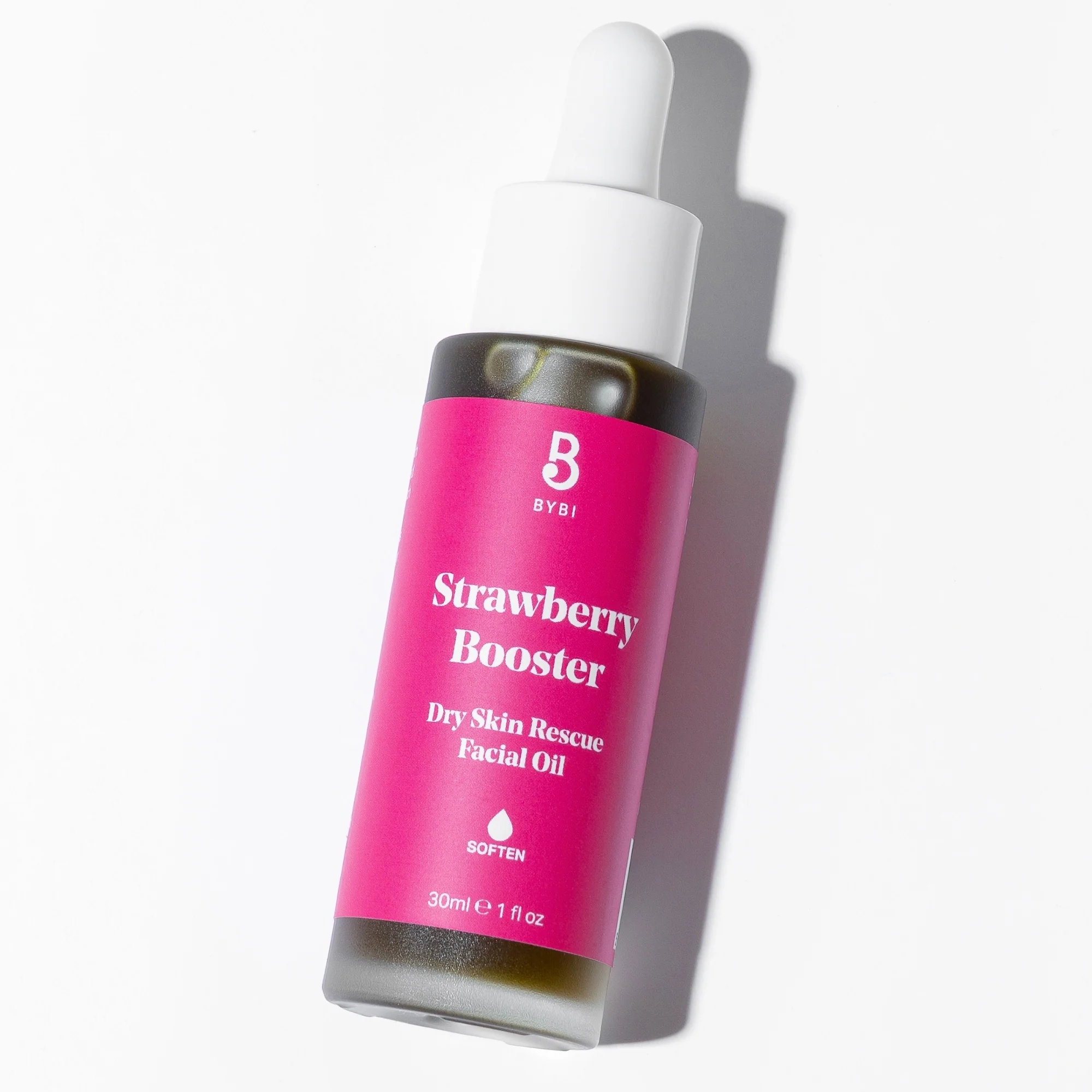
Strawberry Booster
BYBI Strawberry Booster takes almost the opposite approach. The current formula consists of a single ingredient: Fragaria Ananassa (Strawberry) Seed Oil. BYBI describes it as 100% natural and cold pressed, with no added fragrance. The seeds are upcycled from the food industry before the oil is extracted.
We would describe this as an oil booster rather than a conventional hydrating serum. It doesn’t provide water or a humectant system like the Evolve serum. Instead, it adds an emollient layer rich in naturally occurring fatty acids and can be used alone or mixed into another product.
There is another important distinction. We did not find a current organic certification for Strawberry Booster on the brand’s product information, so it belongs here as a simple natural alternative, not as one of the certified organic picks. One ingredient makes the formula unusually transparent. It doesn’t turn a natural claim into an organic certification.
Step 3 Use treatment products for a reason
This is the step that makes organic skincare considerably more interesting than its old reputation suggests. Botanical oils still have a place, but certified formulas now sit alongside retinal, peptides, hyaluronic acid and other actives familiar from mainstream skincare.
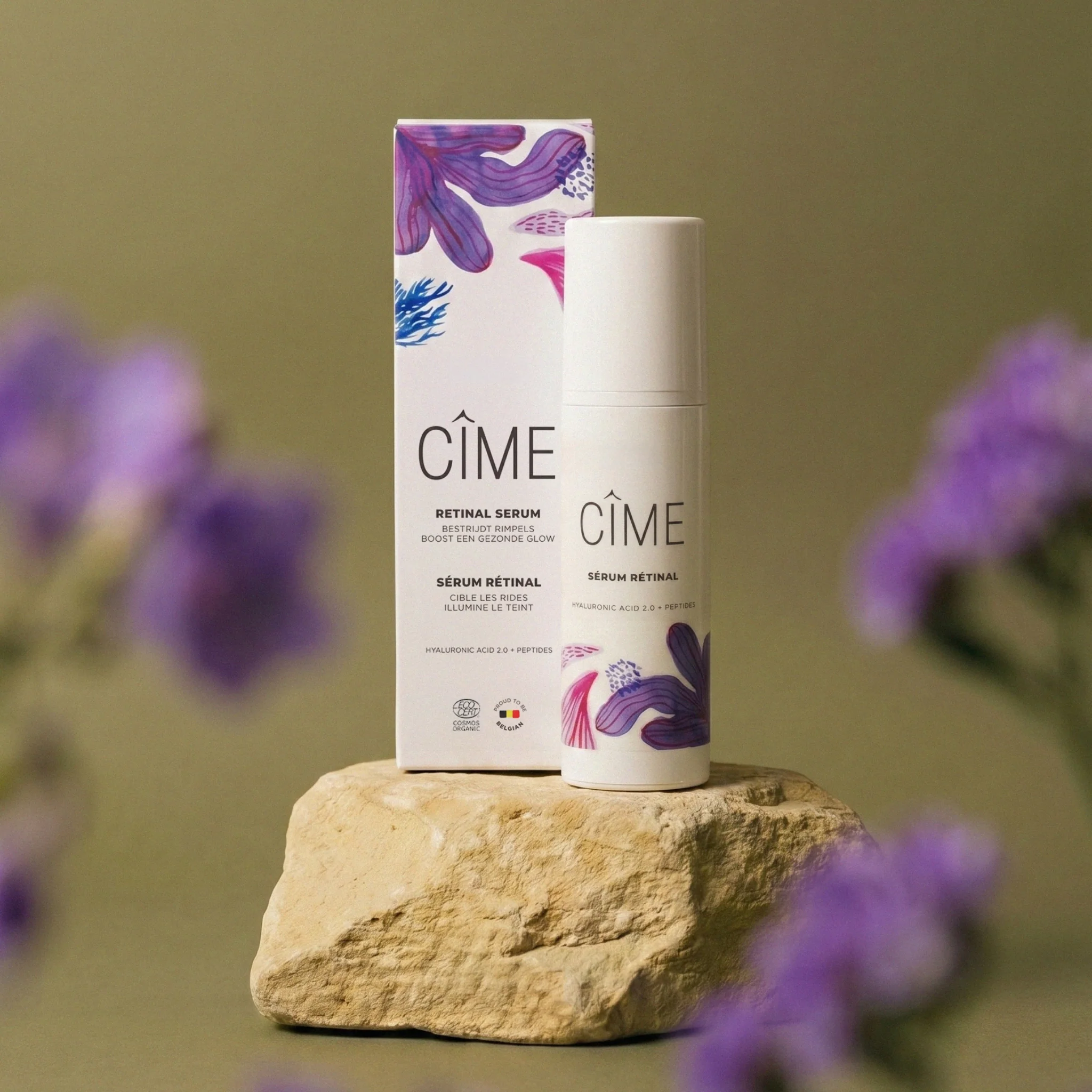
Honestly Aging | Retinal serum
CÎME Honestly Aging Retinal Serum is one of the clearest examples. The formula contains retinal, sodium hyaluronate and hexapeptide-11 alongside aloe, chiuri butter and botanical oils. CÎME declares a high proportion of ingredients from organic farming and the finished serum is COSMOS Organic certified by Ecocert.
Retinal deserves a clarification because the vocabulary around botanical skincare can become slippery. Retinal is retinaldehyde, a vitamin A retinoid. It isn’t simply a botanical substitute for retinol. Our guide to retinoids in skincare explains where retinal sits relative to retinol, retinyl esters and retinoic acid.
In a routine like this, retinal works as an evening treatment introduced according to tolerance. An organic routine doesn’t need extra actives layered on top simply to feel complete.
Another route is bakuchiol, although the two ingredients should not be treated as interchangeable.
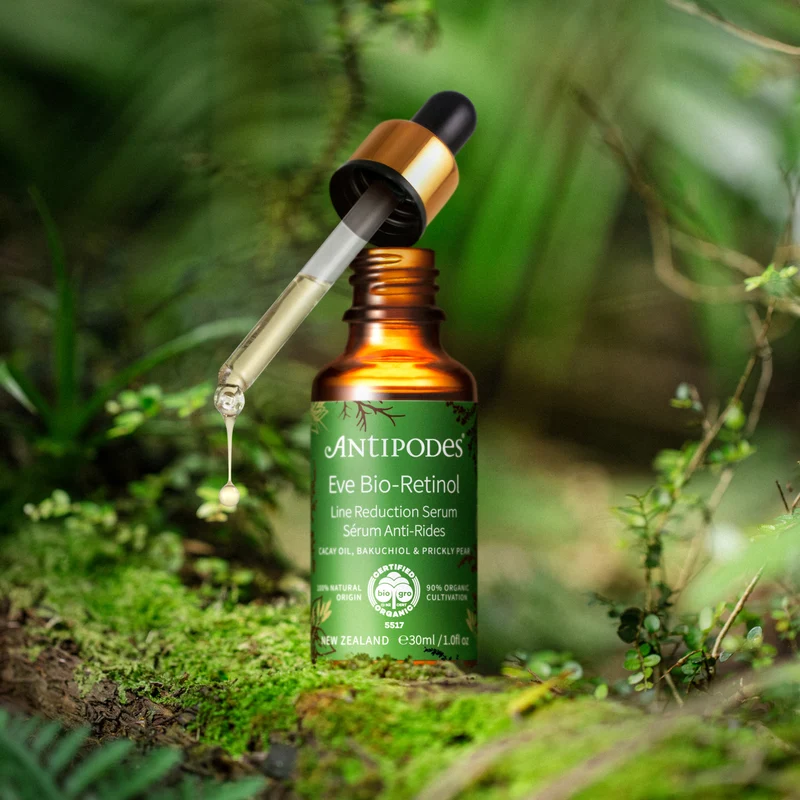
Eve Bio-Retinol Line Reduction Serum
Antipodes Eve Bio-Retinol Line Reduction Serum uses bakuchiol in an oil-based formula containing several certified organic plant oils. Its texture and active strategy are very different from the CÎME retinal serum. That is exactly why both can sit in the same guide without pretending to do the same job in the same way.
Step 4 Choose a moisturiser by formula, then decide whether you need a night cream
A moisturiser is one of the easiest places for marketing categories to become distracting. What the skin experiences is the finished emulsion: water, humectants, oils, butters, fatty alcohols, emulsifiers, preservatives and any additional actives working together.
Here we kept three creams because they represent three different interpretations of the natural and organic category. One is certified organic and fragrance-free, one uses a substantial number of certified organic ingredients inside a more conventional natural formula, and one is a NATRUE-certified night cream built around a blend containing certified organic rosehip oil.
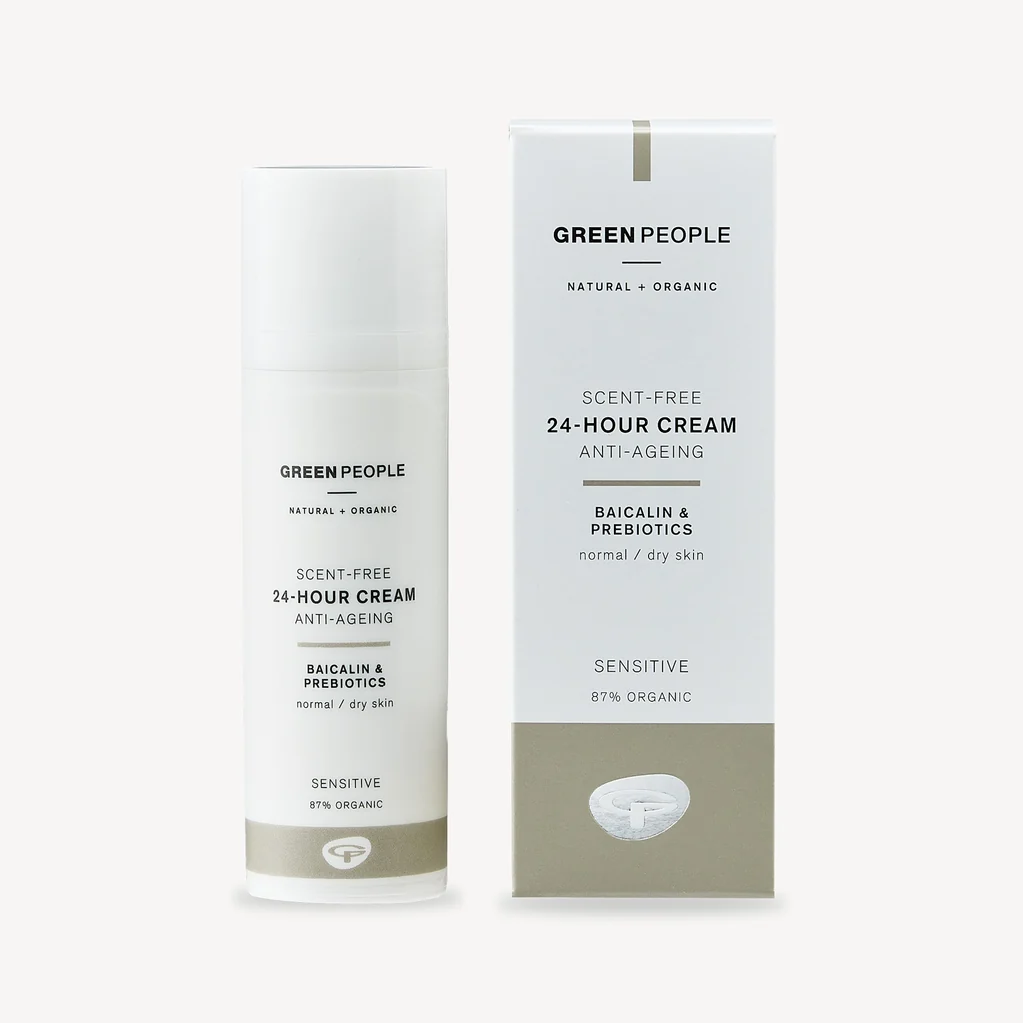
Scent Free 24-Hour Cream 50ml
Green People Scent Free 24-Hour Cream is the cleanest fit if your priority is certified organic skincare with fragrance kept out of the formula. It is COSMOS Organic certified, dermatologically tested and made without added fragrance or essential oils. The richer texture is aimed particularly at sensitive, dry or mature skin that benefits from sustained emollience.
That scent-free positioning matters. Natural fragrance is still fragrance, and essential oils can contain known fragrance allergens. Organic certification doesn’t remove that possibility. If fragrance is something your skin reacts to, a dedicated fragrance-free formula is a more informative filter than a green certification seal on its own.7, 8
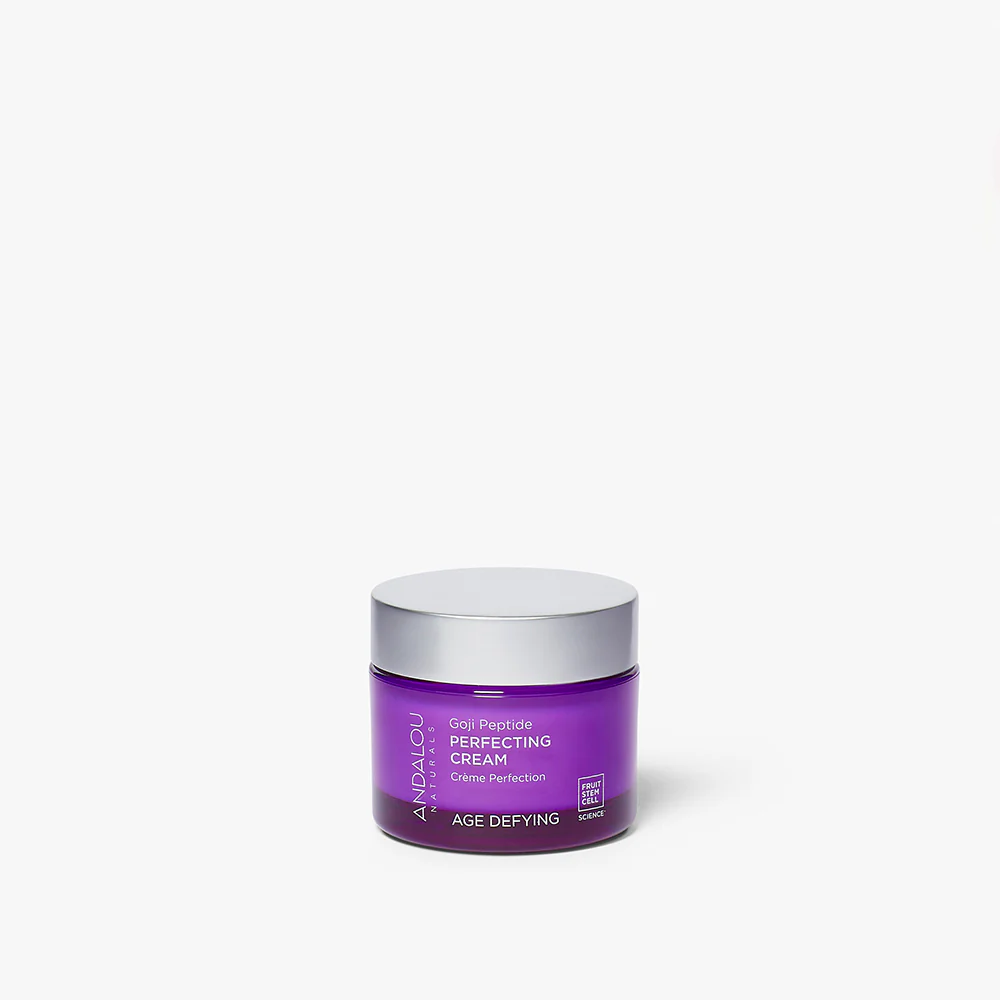
Age Defying Goji Peptide Perfecting Cream
Andalou Naturals Age Defying Goji Peptide Perfecting Cream sits in a different category. Its ingredient list includes certified organic sunflower oil, aloe, jojoba, shea butter, black chokeberry, green tea, açai and borage oil, alongside glycerin, CoQ10, panthenol, plant extracts and other functional ingredients. The finished cream itself is not presented as an organic-certified cosmetic, so we wouldn’t describe it as equivalent to the Green People product.
The formula is more treatment-oriented, with goji, resveratrol-related ingredients, fruit cell culture extracts and CoQ10 supporting the brand’s age-defying positioning. It also contains natural fragrance.
Worth knowing: the INCI includes isopropyl palmitate, an ingredient that appears on traditional comedogenicity screening lists. That does not prove the cream will clog pores, but someone with acne-prone skin who actively avoids flagged ingredients may want to run the full formula through our Pore-Clogging Ingredients Checker before choosing it.
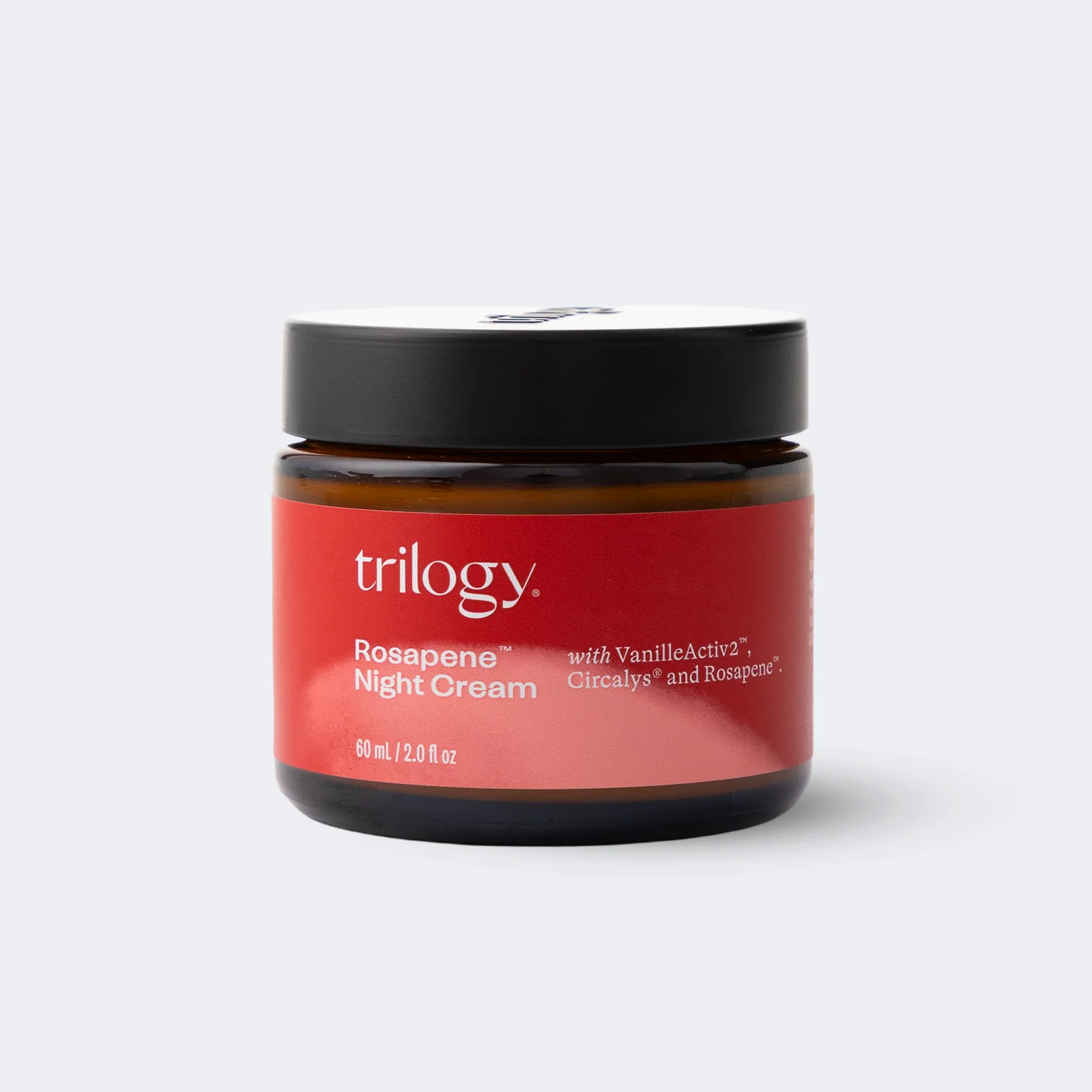
Rosapene™ Night Cream
For the evening, Trilogy Rosapene Night Cream gives us another useful distinction. The current cream is NATRUE Certified Natural rather than certified organic. Trilogy’s Rosapene blend does, however, contain certified organic rosehip oil, and the finished formula is made predominantly from ingredients of natural origin.
The cream combines rosehip oil, sweet almond oil, squalane, shea butter and several botanical oils and extracts in a richer night-time emulsion. It is aimed at hydration, firmness and visible signs of ageing and is substantially more emollient than the Green People cream.
Worth knowing: Rosapene Night Cream contains perfume and naturally occurring fragrance components including citral, citronellol, geraniol, limonene and linalool. Sweet almond oil is also present high in the ingredient list. Someone who is fragrance-reactive, or who wants to avoid ingredients picked up by historical pore-clogging screens, has good reasons to prefer one of the simpler alternatives. NATRUE certification tells us something useful about the natural formulation standard. It doesn’t turn those other considerations off.5
Step 5 Decide whether you actually need a face oil
Face oils are where organic skincare becomes unusually easy to understand. At one end, a bottle can contain a single organically produced oil. At the other, an organic-certified product can combine numerous oils, extracts and aromatic components into a finished luxury blend.
Those formats can sit at completely different prices while occupying a similar place in a routine: adding emollience and changing the feel of skin that remains dry or rough after water-based products and cream.
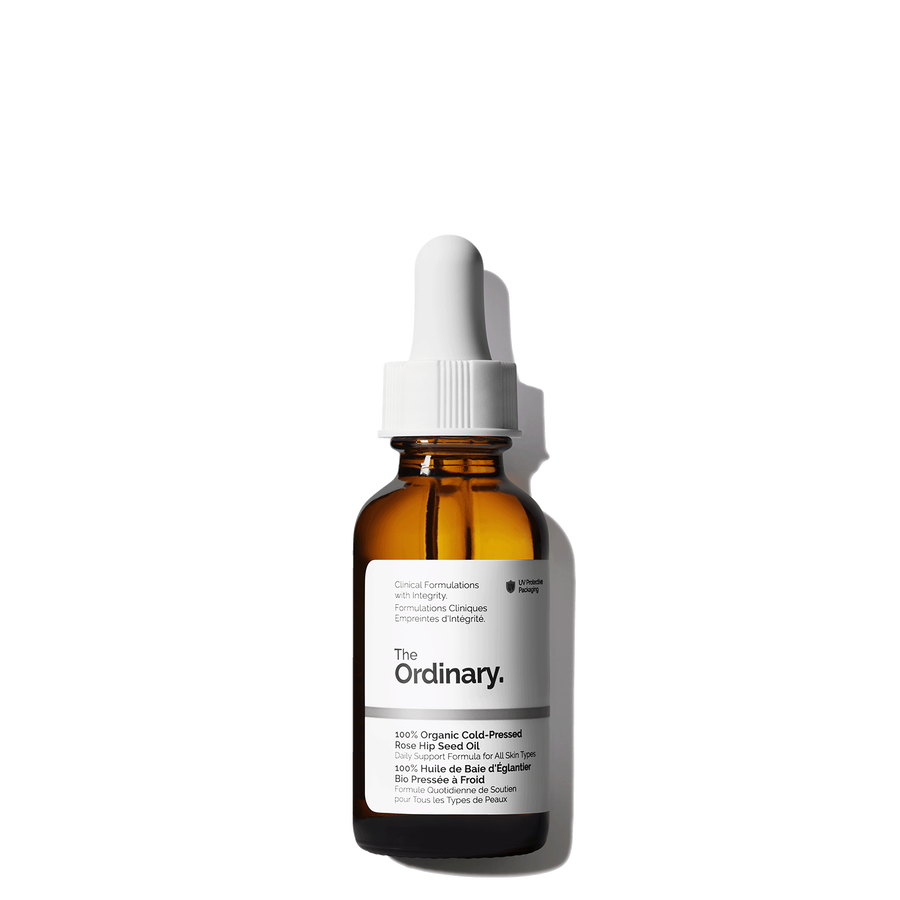
100% Organic Cold-Pressed Rose Hip Seed Oil
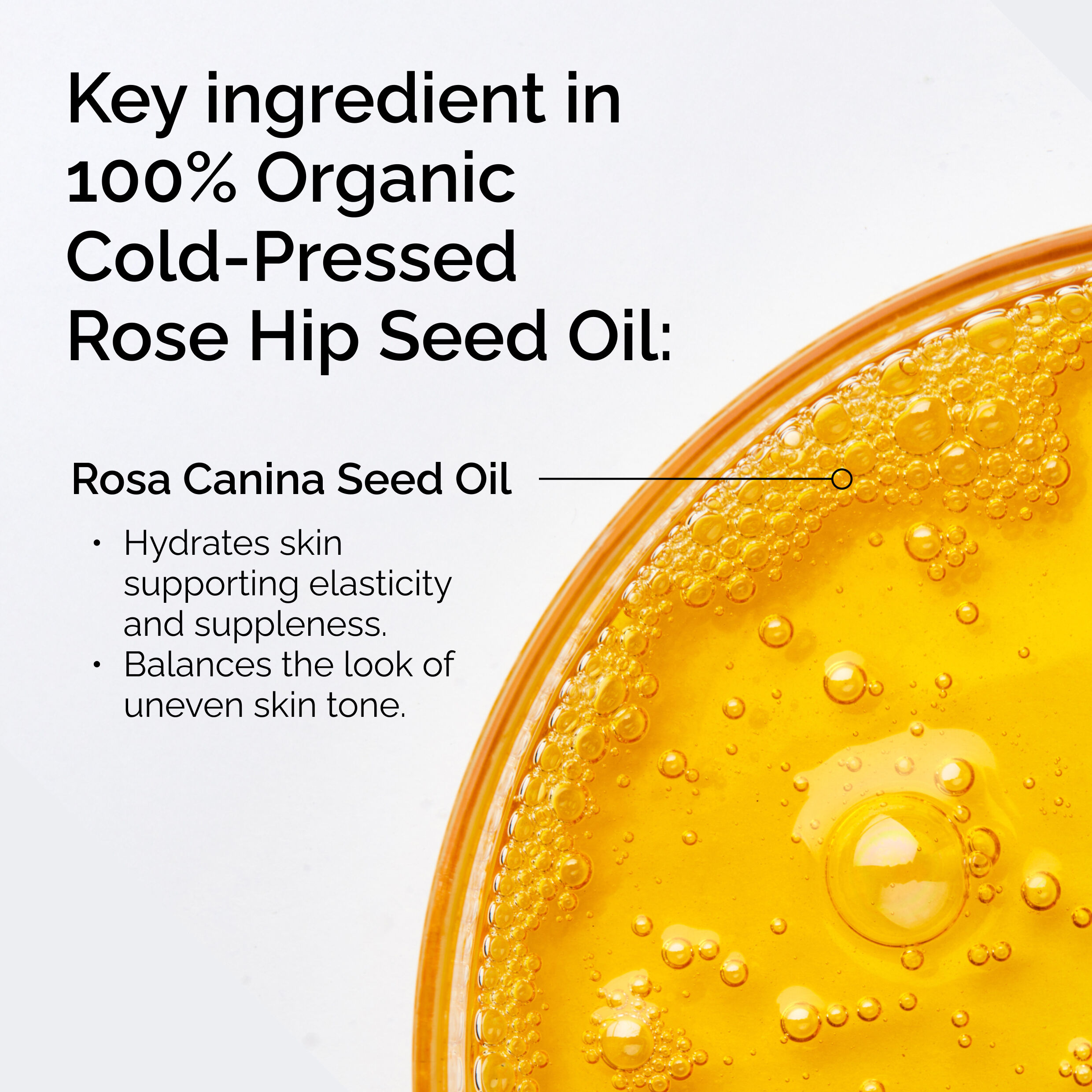
The Ordinary 100% Organic Cold-Pressed Rose Hip Seed Oil sits at the minimalist end of that spectrum. Its ingredient list is Rosa Canina Seed Oil. That’s it. It is also useful in this guide because The Ordinary isn’t an organic skincare brand. This individual product is sold specifically as a 100% organic cold-pressed oil.
That distinction matters throughout the category. We classify the product in front of us rather than relying on the overall aesthetic or name of the company that made it.


Noni Glow Face Oil
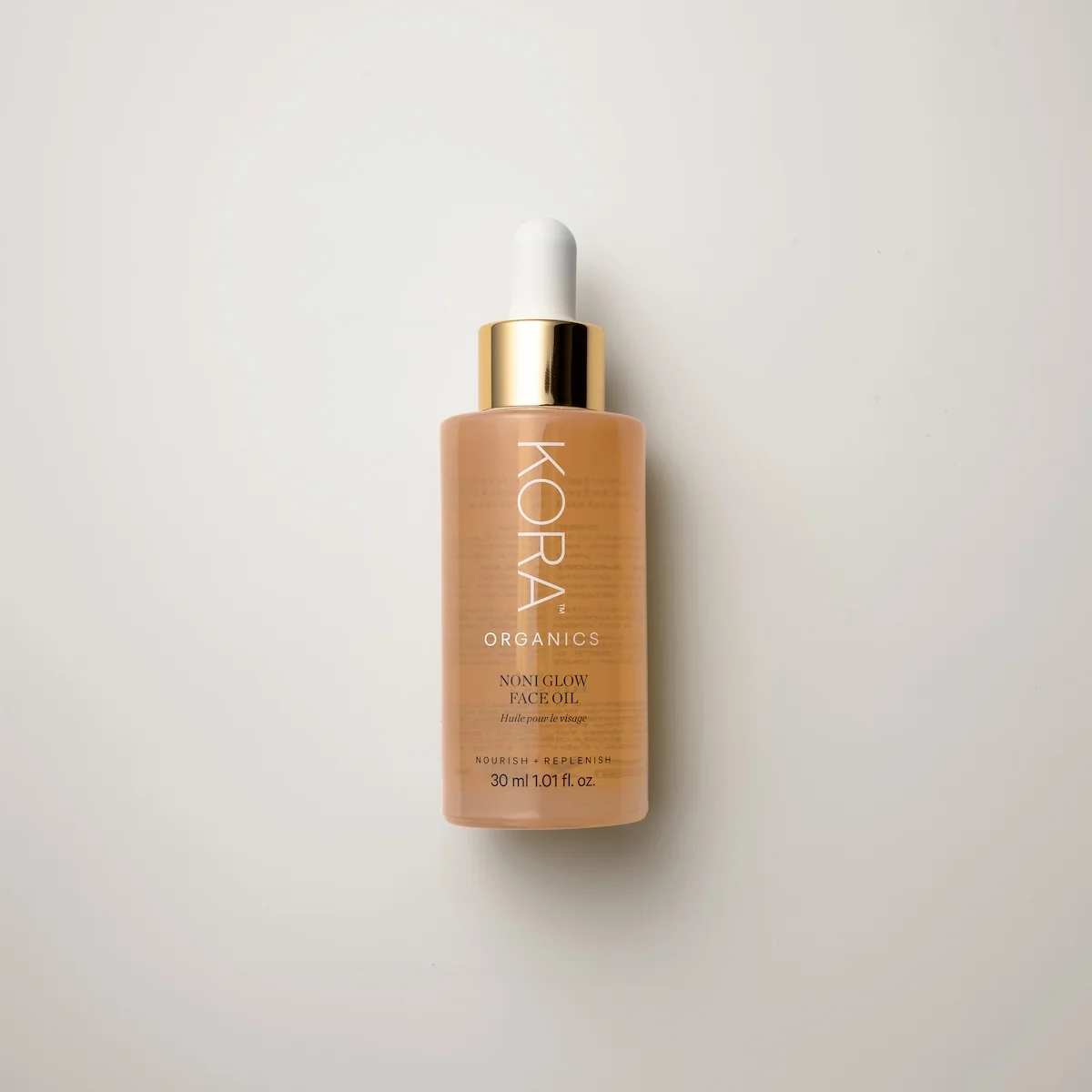
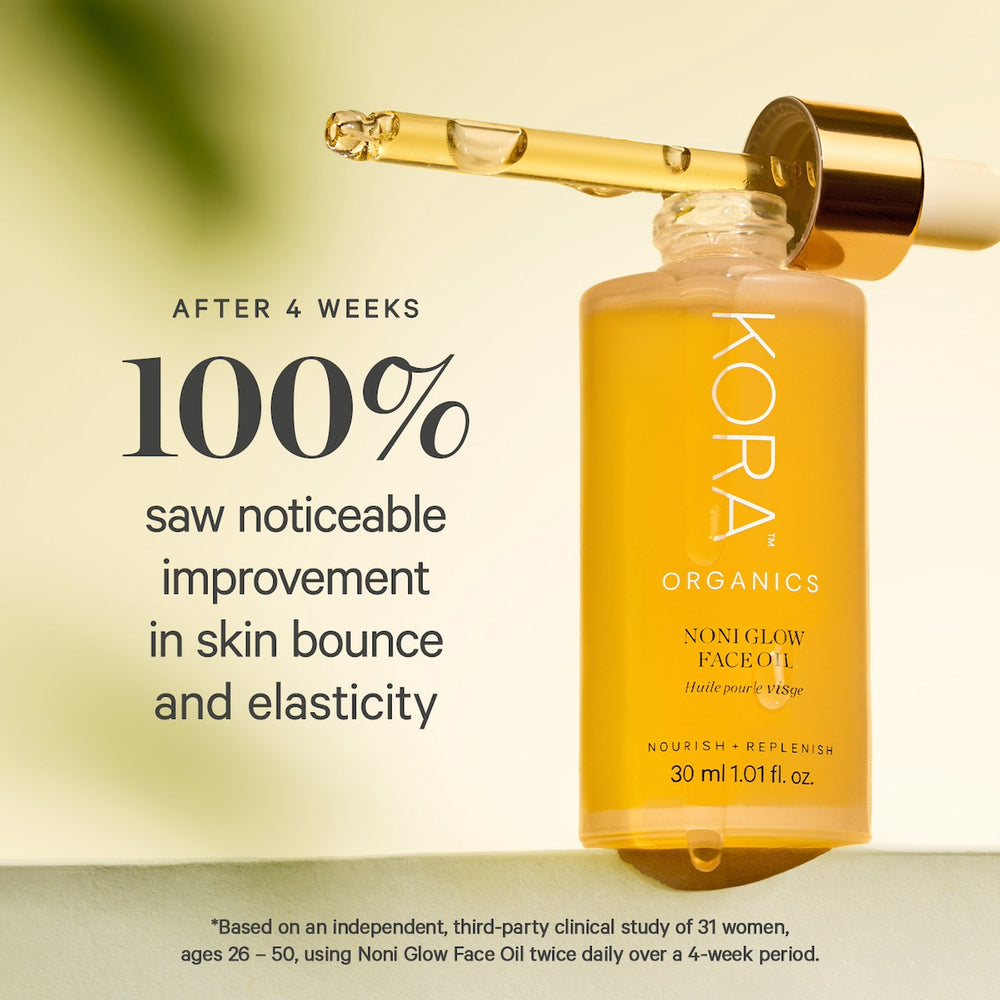
KORA Organics Noni Glow Face Oil takes the blended route. Rosehip, jojoba, sunflower, sea buckthorn and pomegranate oils appear alongside noni extract and aromatic botanical components. KORA declares 97.7% of the total ingredients are from organic farming and COSMOS Organic certification by Ecocert.
The interesting comparison isn’t which bottle wins a purity contest. The Ordinary gives you one material and maximum transparency about what you’re applying. KORA gives you a more elaborate multi-oil formula and a more luxurious sensory proposition. Skin type, fragrance preference, texture and budget are more useful deciding factors than the word organic on its own.
Step 6 Finish the morning routine with sunscreen
Sunscreen exposes another limitation of the phrase organic skincare. Mineral UV filters aren’t crops and cannot be organically farmed. A sunscreen can still be built with organic agricultural ingredients or certified under a cosmetic organic standard, but the sunscreen active remains a mineral ingredient.
Crème Solaire Visage SPF50 BIO Certifiée
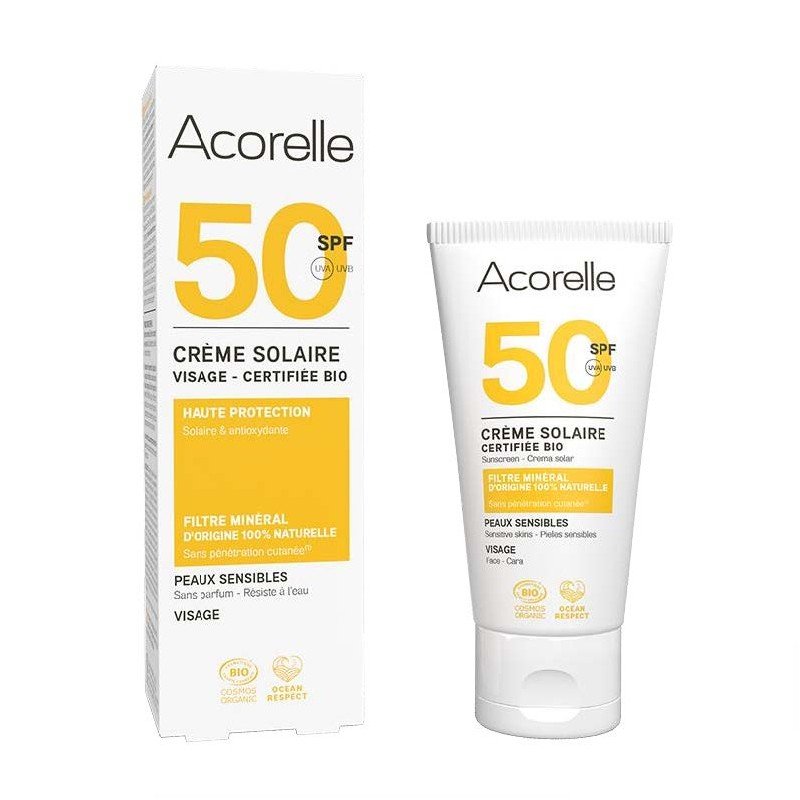
Acorelle Crème Solaire Visage SPF50 BIO Certifiée is our European example. It is COSMOS Organic certified and uses titanium dioxide as the mineral UV filter alongside plant oils, rose water and aloe, including ingredients sourced from organic agriculture.
The filter itself does not become organic. The certification applies to the cosmetic under the relevant standard. What ultimately matters for sun protection is whether the product provides the protection you need, is applied generously enough and is comfortable enough that you will actually keep using it.
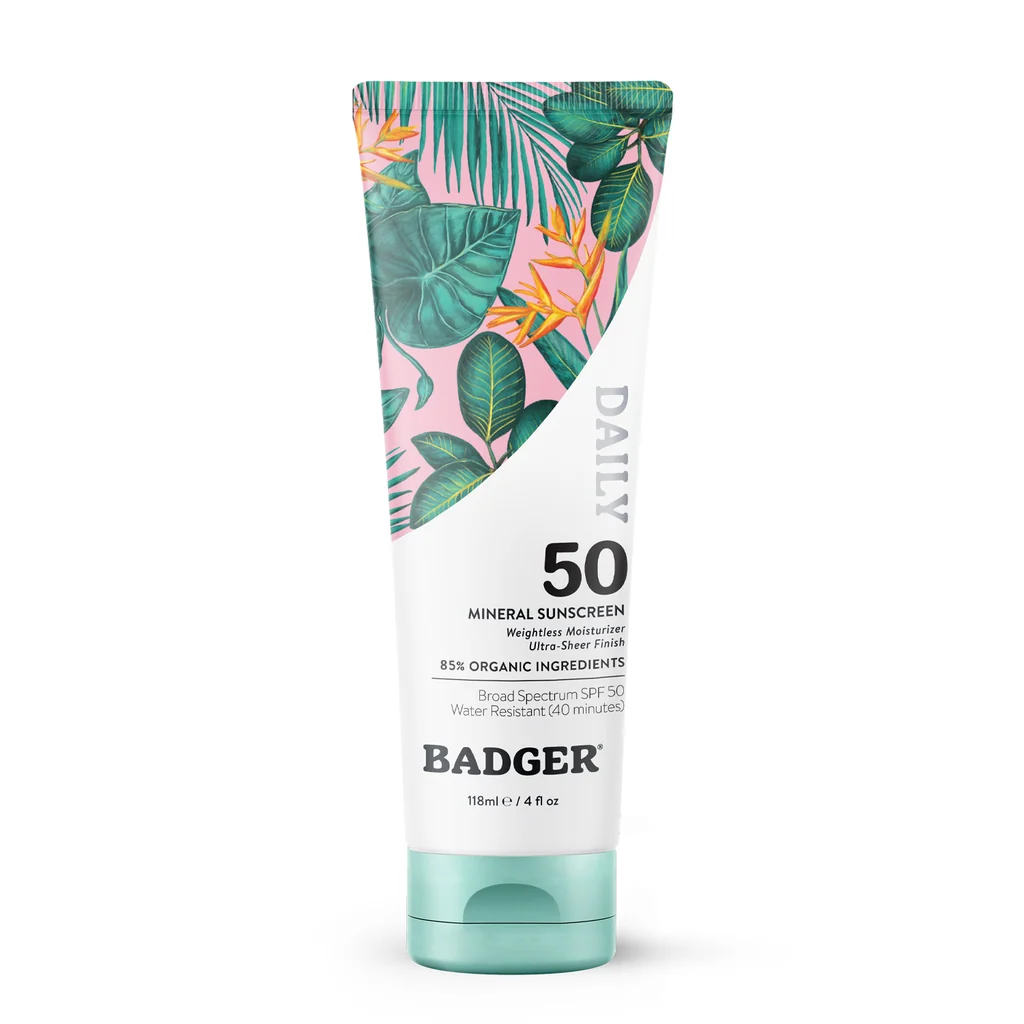


Daily Mineral Sunscreen – SPF 50
Badger Daily Mineral Sunscreen SPF 50 is a particularly useful US comparison. It has only six ingredients and uses 25% zinc oxide as its sole active sunscreen ingredient. Badger reports 85% organic ingredients, broad-spectrum SPF 50 protection and 40 minutes of water resistance. The waterless formula also contains steam-distilled coconut oil, sunflower wax, castor wax, vitamin E and coconut fruit extract.
Badger doesn’t put the USDA Organic seal on this sunscreen. The company explains that the level of mineral zinc oxide means its sunscreens cannot meet the USDA percentage required for that seal. Instead, it uses certified organic agricultural ingredients where possible and reports the percentage of organic content under the NSF/ANSI 305 framework.4
This makes Badger a very good example of why a high organic percentage and an organic-certified finished cosmetic aren’t always the same thing. It is also tested for sensitive skin, vegan and unusually short in terms of INCI, which may matter more to some buyers than whether the front of the tube carries an organic seal.
What organic skincare actually means
The word organic looks reassuringly simple on a cosmetic label. The rules behind it are anything but simple. There is no single international definition of an organic cosmetic, and in the European Union there is no harmonised legal certification equivalent to the organic rules used for food. Natural and organic cosmetic claims still have to be truthful and substantiated, but the detailed criteria are largely provided by voluntary private standards and independent certification schemes.3, 5
That is why two products can both make legitimate references to organic ingredients while carrying very different labels. One may be certified as an organic finished cosmetic. Another may contain a high percentage of certified organic agricultural ingredients without the finished product qualifying for the same certification. A third may be certified natural, with some organic ingredients inside it.
In the United States, USDA Organic and NSF/ANSI 305 answer different questions
The FDA regulates cosmetics in the United States but does not itself define the term organic for cosmetics. When a cosmetic consists of agricultural ingredients and meets the relevant requirements, USDA National Organic Program rules can apply.1, 2
Under USDA rules, 100 percent organic products must contain only organically produced ingredients, excluding water and salt. Products labelled organic must contain at least 95% organically produced ingredients, again excluding water and salt. The wording made with organic ingredients can be used from 70%. Below that threshold, individual organic ingredients can still be identified in the ingredient list, but the whole cosmetic cannot be presented in the same way as a USDA Organic product.2
NSF/ANSI 305 was developed specifically for personal care products and accommodates formulations that cannot fit neatly inside food-style organic rules. Qualifying products with at least 70% organic ingredients by weight can use the wording contains organic ingredients under the standard.4 Badger’s mineral sunscreen earlier in this guide is a good example of why that distinction matters: zinc oxide performs a crucial job in the formula but is a mineral, not an organically farmed ingredient.
Organic and natural cosmetic certification marks worth recognising
Cosmetic packaging introduces another layer of complexity because not every certification mark represents the same thing. Some names identify an international standard, some identify the certification body that audited the product, and others operate both standards and certification programmes within particular markets. Their geographical reach also differs. Reading the wording next to a logo is therefore just as important as recognising the mark itself.
COSMOS Organic and COSMOS Natural
COSMOS is an international cosmetic standard, not simply the logo of one certifier. It was developed by BDIH, Cosmebio, Ecocert, ICEA and the Soil Association and is now managed by the independent COSMOS-standard AISBL. Certification bodies authorised by COSMOS inspect products and place their own mark alongside the COSMOS signature.3
COSMOS Organic requires the complete formula to comply with the standard and to meet defined organic-content thresholds. At least 95% of physically processed agricultural ingredients must be organic. Organic ingredients must represent at least 20% of the total finished product, with a lower 10% threshold for rinse-off products and products containing at least 80% mineral ingredients.9
COSMOS Natural follows the COSMOS requirements for ingredient origin, processing, manufacturing and environmental management but does not require a defined minimum percentage of organic ingredients. This is an important difference. A COSMOS Natural product should not automatically be described as an organic cosmetic.
Water and minerals cannot themselves be organic under COSMOS calculations, which is one reason water-rich serums often show much lower organic percentages than anhydrous oils. The label can display both the percentage of organic ingredients in the whole product and the percentage calculated after excluding water and minerals.
NATRUE Natural and Organic Cosmetics
NATRUE is another international voluntary standard specifically developed for natural and organic cosmetics. Its current system distinguishes two certification levels for finished products: Natural Cosmetics and Organic Cosmetics.5
For the NATRUE Organic level, at least 95% of the relevant natural substances of plant and animal origin, and applicable derived natural substances, must come from certified controlled organic farming or wild collection. NATRUE also sets different minimum and maximum levels of natural and derived-natural substances according to the type of cosmetic, rather than applying one identical formula calculation to cleansers, oils, emulsions and sunscreens.
Added water is not used to artificially inflate the natural or organic proportion. The NATRUE standard also excludes categories including silicones, parabens, mineral oils, microplastics, synthetic fragrances and GMOs from certified formulations.5
This distinction is relevant to the Trilogy Rosapene Night Cream in our routine. It carries NATRUE Natural certification and contains certified organic rosehip oil, but that does not make the finished cream NATRUE Organic.
BioGro Certified Organic
BioGro is New Zealand’s leading organic certification agency and has a dedicated Health & Body Care organic standard. Its certification covers more than the agricultural origin of individual ingredients: certified products must comply with requirements covering ingredients, processing, labelling and production, and must be manufactured in an approved certified facility.13
For cosmetics, the BioGro mark indicates that the finished product has been independently assessed against the organisation’s organic standard. BioGro’s standards include a specific Health & Body Care module, alongside requirements for certification systems and processing. The organisation also verifies certified operators through audits and requires use of the BioGro logo and organic claims to be approved.13
BioGro is particularly relevant when looking at skincare from New Zealand and the wider Pacific beauty market. Antipodes, for example, uses BioGro certification on a number of its organic formulations, including Eve Bio-Retinol Line Reduction Serum. The product page identifies its organic plant oils individually and states that the finished formula is certified to the BioGro organic standard.
There is an important geographical distinction. BioGro currently describes its own Health & Body Care certification as primarily intended for products sold in New Zealand. For brands seeking an internationally recognised natural or organic cosmetics certification for export, BioGro also acts as a certifier for NATRUE. A BioGro logo should therefore be read as evidence of certification to the BioGro organic standard, without assuming that it is legally equivalent to COSMOS, NATRUE or another certification scheme in every destination market.13
ICEA
ICEA is a certification body rather than a competing international standard equivalent to COSMOS. The Italian organisation was one of the founding members that developed COSMOS and today certifies both COSMOS Organic and COSMOS Natural cosmetics. It also has a long history of its own Eco Bio Cosmetics and Natural Cosmetics standards.9
This history can make older labels slightly confusing. ICEA’s own Eco Bio Cosmetics scheme was developed before the international COSMOS system became established. It covers ingredient origin, environmental criteria, finished-product testing and substantiation of claims. ICEA states that new products have not been accepted into this legacy standard since 2017, although previously certified products can still be encountered.10
On a current product, therefore, don’t stop at the word ICEA. Look for the accompanying wording. If the label says COSMOS Organic or COSMOS Natural, COSMOS is the standard being applied and ICEA is the body responsible for certification.
CCPB Organic Cosmetics
CCPB is another Italian inspection and certification body. In cosmetics it operates its own standards for natural and organic products and is also an approved certification body for NATRUE. The logo therefore needs to be read together with the name of the certification scheme shown on the product.11
Under CCPB’s own Organic Cosmetics standard, a cosmetic described as organic must contain at least 95% organic ingredients according to the scheme’s criteria. The standard also restricts materials including petroleum derivatives, paraffins, formaldehyde, synthetic colourants, GMOs and synthetic fragrances.12
CCPB also has a separate Natural Cosmetics standard and provides NATRUE certification. So a CCPB mark on its own should not be translated mentally into one universal percentage of organic content. Check whether the accompanying certification says Organic Cosmetics, Natural Cosmetics or NATRUE and then apply the rules of that particular scheme.
Why the percentage on the label still needs context
The certification logo answers a sourcing and formulation question. It does not rank product performance. An anhydrous face oil can reach an extremely high organic percentage because nearly everything in the bottle is an agricultural ingredient. A water-based serum may contain a much smaller percentage even while meeting a demanding organic cosmetic standard, because water cannot be organically farmed and modern formulas also contain non-agricultural functional ingredients.
The fastest way to read a certification is therefore to ask three things. Which standard is named? Is the finished product certified, or are only some ingredients certified? And does the label say Organic, Natural or simply that the formula contains organic ingredients? Those three details tell you considerably more than a green logo viewed on its own.
Natural, organic, vegan and cruelty-free describe different things
These claims are regularly stacked together on packaging even though they answer different questions.
| Term | What it can tell you | What it doesn’t automatically tell you |
|---|---|---|
| Organic | How eligible agricultural ingredients were produced and, with certification, whether the product meets a defined organic standard | Safety, efficacy, fragrance status or suitability for sensitive skin |
| Natural | That the product meets a natural-origin definition under a particular certification or brand framework | That the finished cosmetic is organically certified |
| Contains organic ingredients | That identified ingredients or a defined proportion of the formula meet organic requirements | That the entire cosmetic meets an organic finished-product standard |
| Vegan | No intentionally used animal-derived ingredients under the relevant definition | Organic, natural or cruelty-free status |
| Cruelty-free | Relates to animal-testing policy or certification | That the product is vegan, natural or organic |
| Fragrance-free | No deliberately added fragrance under the applicable claim | Organic status or guaranteed tolerance for sensitive skin |
The FDA makes another useful point that applies well beyond the US market: the source of an ingredient does not determine its safety. Botanical ingredients can irritate or trigger allergy whether the plants were grown organically or conventionally.1
Five products that show why the labels need context
The routine above includes several products that look similar when reduced to the words natural and organic, yet they occupy different regulatory and formulation categories. Keeping those categories visible is more useful than forcing every product into the same bucket.
| Product | How we would describe it | Why the distinction matters |
|---|---|---|
| The Ordinary 100% Organic Cold-Pressed Rose Hip Seed Oil | Single-ingredient product sold by the brand as 100% organic | The Ordinary as a whole is not an organic skincare brand |
| BYBI Strawberry Booster | 100% natural single-ingredient strawberry seed oil | The current product information does not document an organic certification |
| Andalou Goji Peptide Perfecting Cream | Natural-positioned cream containing multiple certified organic ingredients | The finished cream is not presented as an organic-certified product |
| Trilogy Rosapene Night Cream | NATRUE Certified Natural cream containing a blend with certified organic rosehip oil | Natural certification and organic certification are not interchangeable |
| Badger Daily Mineral Sunscreen SPF 50 | Mineral sunscreen with 85% organic ingredients | Zinc oxide is not an agricultural ingredient, so organic-content standards need to be interpreted differently |
The ingredients you’ll keep seeing in organic skincare
Spend enough time reading organic INCI lists and the same ingredients begin to reappear. Some are popular because they can be agriculturally produced and certified organic. Others are present because contemporary skincare still needs humectants, emulsifiers, preservatives and functional actives.
You can explore individual profiles in the BeautyLookup ingredient index. These are some of the ingredients worth recognising first.
| Ingredient | Why it appears so often | What to notice on the label |
|---|---|---|
| Aloe vera | Common water-rich botanical ingredient in gels, serums, creams and after-sun products | Look for Aloe Barbadensis Leaf Juice, extract or powder and check whether the organic status applies to the aloe itself |
| Jojoba oil | Stable wax ester-rich emollient used in face oils, creams, balms and lip products | Usually listed as Simmondsia Chinensis Seed Oil |
| Rosehip oil | Popular face-oil ingredient containing a naturally occurring mixture of fatty acids and minor components | Check the botanical species and whether the product is a single oil or part of a blend |
| Sunflower seed oil | Versatile emollient that appears in moisturisers, cleansers, bodycare and sunscreens | Often listed as Helianthus Annuus Seed Oil |
| Strawberry seed oil | Light plant oil increasingly appearing in facial oils and boosters | Usually listed as Fragaria Ananassa Seed Oil; natural origin alone does not establish organic certification |
| Argan oil | Used across face, body and hair for emollience | Usually appears as Argania Spinosa Kernel Oil |
| Shea butter | Rich semi-solid emollient common in creams, balms and bodycare | Usually listed as Butyrospermum Parkii Butter |
| Coconut oil | Common in balms, soaps, sunscreen bases, lip care and body products | Its role and sensory effect depend heavily on the rest of the formula |
| Calendula | Frequently used botanical extract in balms and formulas for dry or delicate skin | Often appears as Calendula Officinalis Flower Extract |
| Rose water | Aromatic botanical water used in mists and water-based serums | It can contribute scent even without a separate perfume accord |
| Glycerin | One of the most familiar humectants in skincare | Organic certification of the finished product doesn’t mean every functional ingredient is itself an agricultural organic material |
| Hyaluronic acid and sodium hyaluronate | Modern hydration ingredients increasingly found in organic-certified serums | They show how contemporary cosmetic chemistry and organic certification can coexist |
| Squalane | Light emollient found in both conventional and natural-positioned moisturisers | Its presence says little about the organic status of the whole formula |
| Beeswax | Provides structure and occlusion in balms and lip products | It is animal-derived, so an otherwise organic product containing beeswax is not vegan |
| Essential oils | Used for scent, sensory character and botanical positioning | Organic origin doesn’t remove their fragrance-allergen potential |
This also explains why a product can legitimately be certified organic without every functional ingredient being an organic agricultural material. Cosmetic formulas still need to remain stable, microbiologically safe and usable. Those requirements don’t disappear when a brand works with organic agriculture.
What organic doesn’t tell you about a formula
Organic claims answer a narrower question than beauty marketing sometimes suggests. They are useful, but they leave many properties of the finished product unresolved.
Organic doesn’t automatically mean fragrance-free
Essential oils and fragrant botanical extracts appear frequently in natural and organic cosmetics. Limonene, linalool, citronellol, geraniol and other fragrance components can appear because they occur naturally in essential oils or are part of added fragrance materials.
Fragrance contact allergy is well documented, and reviews of natural cosmetic ingredients have identified botanically derived materials capable of causing allergic reactions in susceptible people.7, 8 Fragranced organic skincare isn’t automatically a bad choice. Organic and fragrance-free simply answer different questions.
Organic doesn’t automatically mean suitable for sensitive skin
A plant ingredient can be useful, neutral, irritating or allergenic depending on the substance, concentration and individual using it. Studies of fragrance allergy include both synthetic fragrance substances and naturally occurring constituents of essential oils.7, 8
If your skin is already reacting to products, has persistent dermatitis or stings with basic skincare, adding more botanical extracts can create more variables to untangle. A short, predictable routine may be easier to interpret. Our guide to the skin barrier and barrier recovery looks at that problem in more detail.
Organic doesn’t mean non-comedogenic
Plant oils are especially easy to oversimplify. Historical comedogenicity lists assign ratings to raw materials, yet the early testing methods relied heavily on animal models and don’t reliably predict the behaviour of every finished cosmetic on human facial skin. Modern reviews continue to point out the absence of a universally standardised method for determining whether a cosmetic is comedogenic.6
That doesn’t make ingredient screening useless. It changes what the result means. A flagged ingredient can be useful when you are comparing formulas or trying to identify patterns in products that repeatedly give you problems. It should not be read as proof that every product containing that ingredient will block your pores.
You can use our Pore-Clogging Ingredients Checker to screen a complete INCI list and see which ingredients match the reference data.
Organic doesn’t tell you whether the formulation performs well
Certification can tell us something verifiable about sourcing and formulation standards. It doesn’t tell us whether a moisturiser has the texture you enjoy, whether an oil spreads elegantly, whether a cleanser removes your sunscreen effectively or whether a serum produces a clinically meaningful improvement for a particular concern.
Two creams can both contain organic aloe, jojoba and shea butter and behave completely differently because the percentages, emulsifiers, humectants, thickeners and manufacturing processes are different. Recognising ingredients is useful. Predicting the performance of a finished formula from a handful of fashionable ingredients is much harder.
Organic bodycare worth looking beyond the face for
Organic beauty becomes particularly easy to explore in bodycare because oils, balms and wax-based products often rely heavily on agricultural ingredients. It is also a good place to be pragmatic. A body product needs to be something you are willing to spread over a much larger area of skin regularly.


Baby Face Nose & Cheek Balm
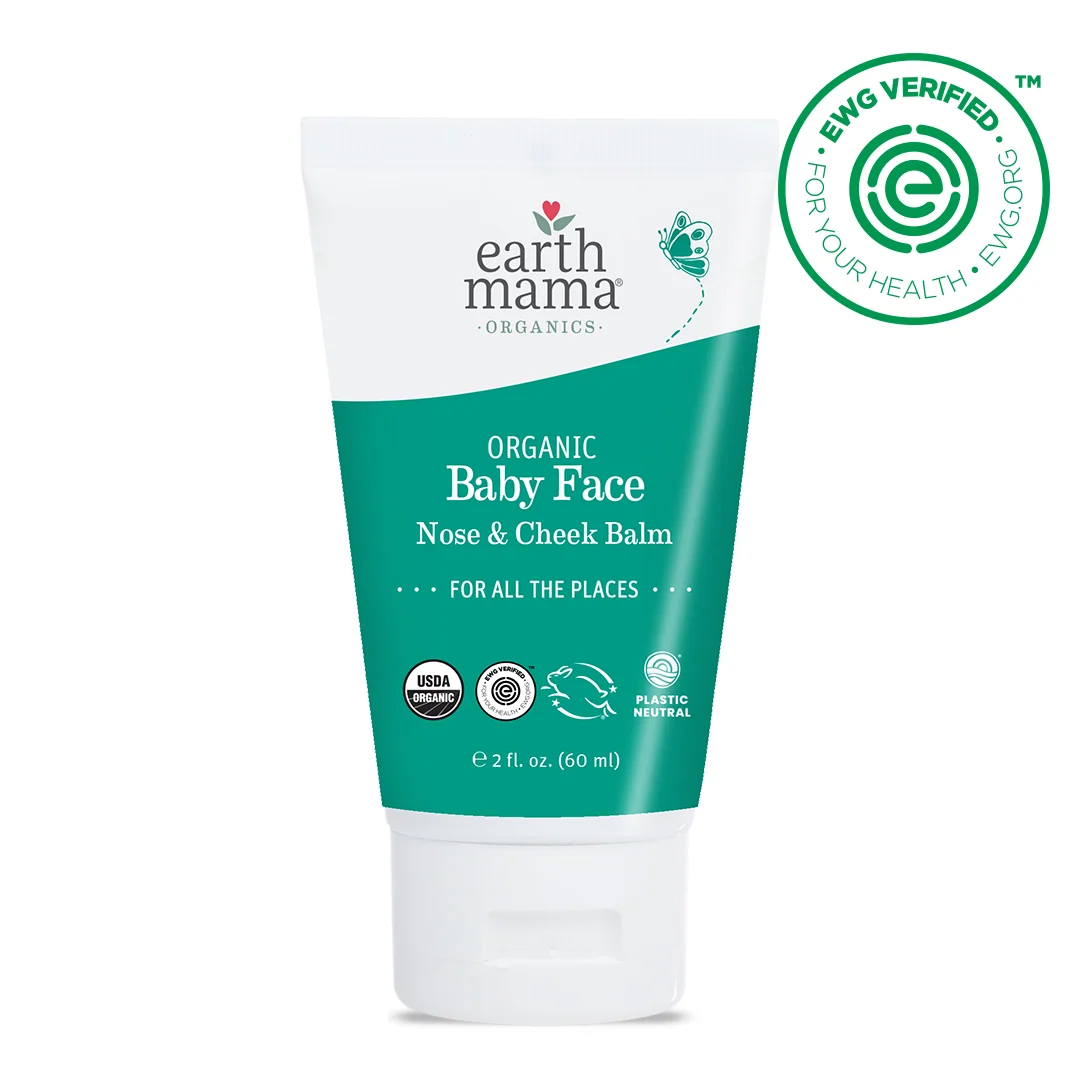
Earth Mama Organic Baby Face Nose & Cheek Balm is a compact example of the traditional balm route. It combines organic sunflower oil, beeswax, coconut oil, shea butter and calendula extract and is certified organic by Oregon Tilth. Despite the baby-focused name, the formula is essentially a simple multipurpose balm for small dry areas.
The beeswax means it isn’t vegan, which is another useful reminder that organic, natural and vegan status need to be tracked separately.
Bodycare is also where richer textures can make more practical sense than they do on an acne-prone face. Oils, waxes and butters that some users avoid in facial skincare may be exactly what they want for elbows, hands, shins or other persistently dry areas.
Organic haircare has its own trade-offs
Haircare is a reminder that organic ingredients and product performance have to coexist with basic cosmetic engineering. A shampoo still needs a cleansing system. A conditioner still needs enough deposition and slip to reduce friction. A hair oil needs to spread through the lengths without turning them into an oil slick.
Botanical Therapeutic – Unscented Shampoo & Body Wash
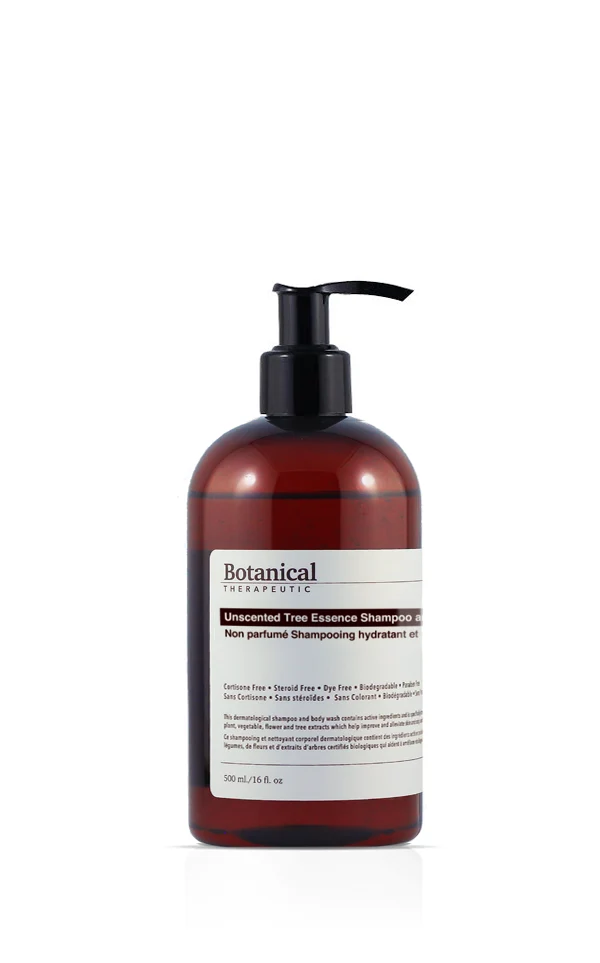
Carina Organics Botanical Therapeutic Shampoo & Body Wash (Unscented) takes a different route from a fully certified organic shampoo. Carina describes the formula as made with natural and certified organic plant, vegetable, flower and tree extracts, while the finished product itself is not presented as USDA Organic or COSMOS Organic.
The formula combines a low-lather cleansing base with glycerin, olive oil and botanical extracts including alfalfa, chamomile, echinacea, nettle and red clover. Its unscented format is particularly interesting in a natural haircare market where essential oils are common, and the shampoo/body wash format keeps the routine relatively streamlined.
This is another useful distinction between a certified organic product and a product made with certified organic ingredients. Both can be interesting. They should not be described as if the certification status were identical.

Haircare Oil With 7 Precious Oils
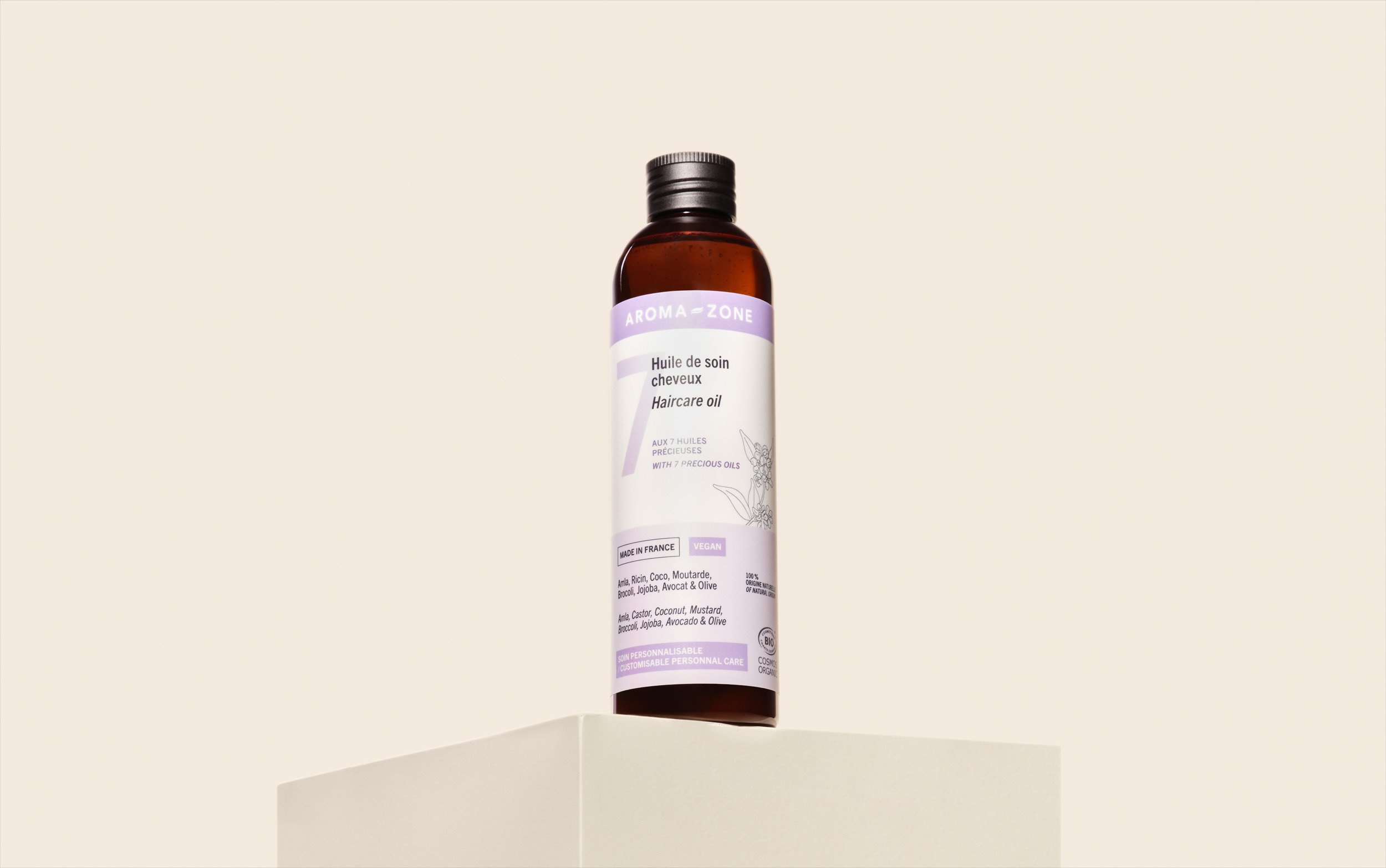
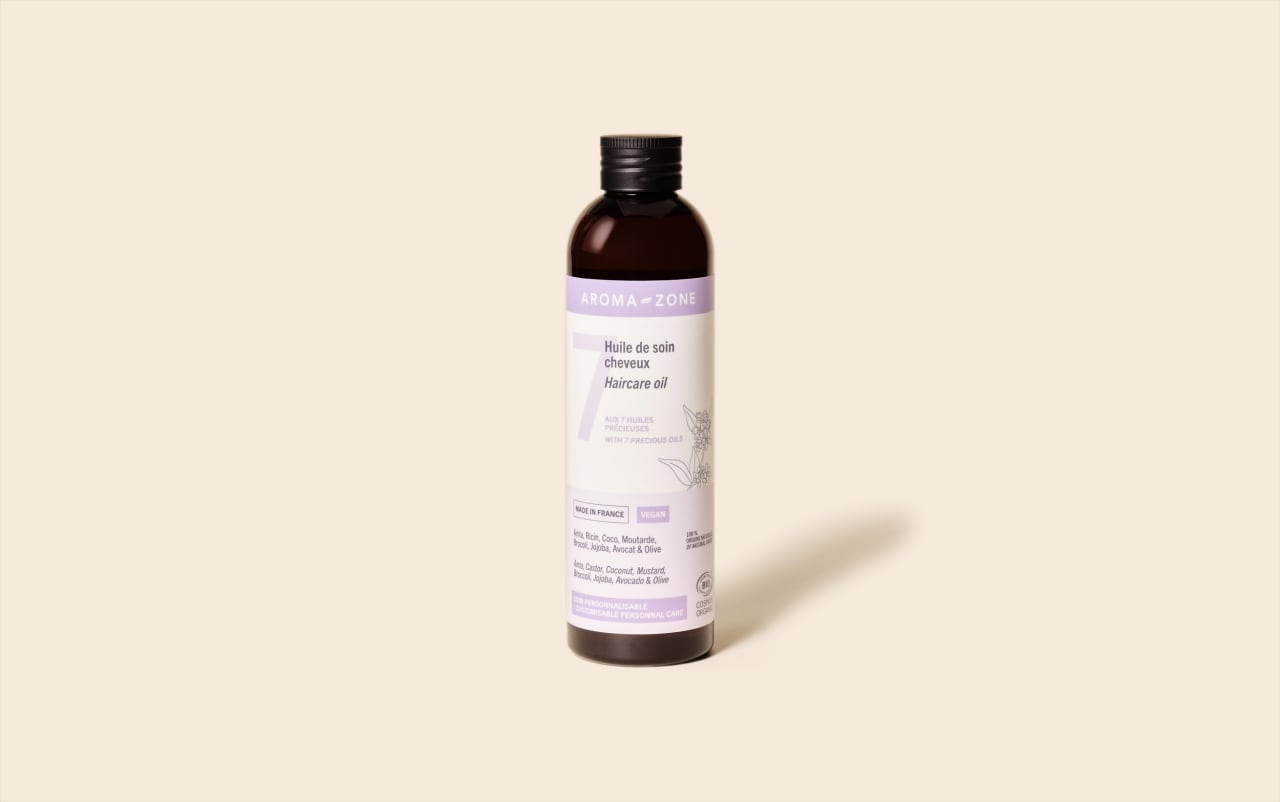
Aroma-Zone Haircare Oil With 7 Precious Oils gives us the opposite format. It is an oil treatment rather than a cleanser, is 100% natural origin and is COSMOS Organic certified by Ecocert. Seven plant oils plus an oil macerate form the basis of a product designed for use before shampooing, through the lengths or in small amounts as leave-in care.
This kind of formula also illustrates why organic percentages tend to look impressive in water-free oils. There is very little in an anhydrous blend that has to compete with the agricultural ingredients when the percentage is calculated.
Organic lip care can be one of the simplest categories


Luxury Lip Balm
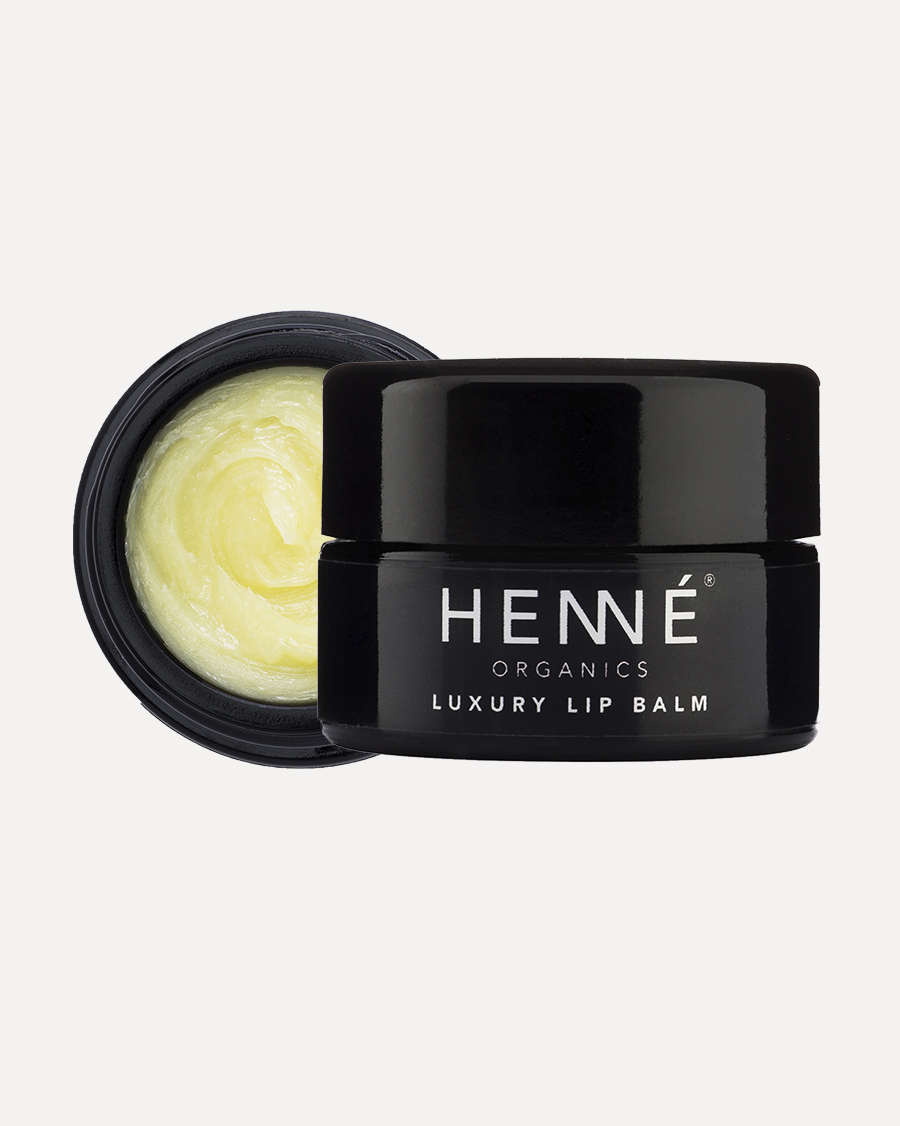
Henné Organics Luxury Lip Balm makes the category particularly easy to read. It is USDA Certified Organic and uses a compact mixture of coconut oil, beeswax, avocado oil, shea butter, cocoa butter, jojoba oil and vitamin E. It is unscented and contains no essential oils.
Again, beeswax means organic does not mean vegan. A short ingredient list also doesn’t automatically mean that every person will tolerate the product, but it does make the formula unusually easy to understand.
How we chose the products
We didn’t sort products by organic percentage and call the highest number the winner. That would heavily favour water-free oils and balms while telling us little about whether a complete routine is usable.
We looked first for a verifiable certification, a documented organic percentage or a clearly defined organic-ingredient claim. Then we read the complete INCI, considered what the product could realistically contribute to a routine and looked at factors that might change the choice for different users, including fragrance, essential oils, oil-heavy textures and ingredient-level comedogenicity flags.
Price also matters. Organic skincare now stretches from large family-size washes and straightforward single-ingredient oils to luxury blends and highly active treatment formulas. An article that only shows the prestige end of that spectrum gives a distorted picture of the category.
We also included several products that aren’t themselves certified organic. BYBI Strawberry Booster, Andalou’s Goji Peptide cream and Trilogy Rosapene Night Cream are useful precisely because their status is different. They show the difference between natural origin, certified organic ingredients, natural-product certification and certification of the finished cosmetic.
Community discussion matters as well, although it is not treated as clinical evidence. Forums and product communities repeatedly surface the same practical questions: whether natural fragrance is too much for reactive skin, whether oil-rich formulas trigger breakouts, whether affordable products perform as well as prestige ones and how much an organic certification should influence a purchase. Those conversations help identify the questions worth checking against ingredient lists, certification standards and published evidence.
So, is an organic skincare routine worth building?
It can be, especially if organic agriculture and independently verified sourcing are part of what you want your purchases to support. The category is now broad enough to include simple cleansers, water-based serums, retinal treatments, fragrance-free creams, facial oils, mineral sunscreens and body and hair products.
The certification still needs to stay in proportion. Skin interacts with a finished formula, not the logo printed beside the ingredient list.
A simple certified organic cleanser can be a better fit for your routine than a luxury botanical balm. A hydrating COSMOS serum can sit comfortably beside a single-ingredient oil. A NATRUE natural night cream may contain certified organic rosehip oil without becoming an organic-certified cream. A mineral sunscreen can contain 85% organic ingredients even though its zinc oxide prevents it from carrying a USDA Organic seal.
The useful approach is to keep both layers visible. Check what organic actually means for the product, then ask the same questions you would ask about any cosmetic. What is in the formula? What job is it meant to do? Does your skin need that job done? Are there ingredients you know you prefer to avoid? And is the product good enough to earn its place in your routine?
Frequently asked questions
Organic and natural are separate concepts. Organic claims relate to how eligible agricultural ingredients are produced and, when a certification is present, to compliance with a defined standard. Natural claims generally concern ingredient origin under a particular standard or brand definition. A natural cosmetic isn’t automatically organic, and an organic-certified cosmetic can contain allowed ingredients that aren’t agricultural materials.
Not automatically. Organic cosmetics can contain fragrance, essential oils and botanical extracts that some people don’t tolerate. If your main concern is sensitivity, fragrance-free status, overall formula simplicity and your own history with particular ingredients may matter more than the organic claim.
No. Everything in a cosmetic formula is made of chemicals, including water, plant oils and botanical extracts. Organic certification describes production and formulation standards. It doesn’t divide matter into “chemicals” and “non-chemicals”.
Yes, depending on the formulation and certification standard. CÎME’s Honestly Aging Retinal Serum is one example of a COSMOS Organic certified product containing retinal. Organic certification of the finished cosmetic doesn’t mean retinal itself was organically farmed.
No. Certification may apply to individual products rather than every product sold under the brand name. Check the certification or organic claim on the specific formula instead of assuming that a company name applies the same status across its entire catalogue.
Yes. Certified organic beauty now includes affordable cleansers, simple oils and large family-size products as well as prestige serums and face oils. Price does not determine whether a product meets an organic certification standard.
Organic status does not determine whether a product will clog pores. Some plant oils and fatty ingredients appear on historical comedogenicity screening lists, but ingredient-level ratings do not reliably predict the behaviour of every finished formula. Skin type, concentration, formulation and whether a product is rinsed off or left on all matter.
References
- U.S. Food and Drug Administration. “Organic” Cosmetics. Current FDA guidance page.
- U.S. Department of Agriculture, Agricultural Marketing Service. Cosmetics, Body Care, and Personal Care Products. National Organic Program guidance.
- COSMOS-standard AISBL. COSMOS certification. Organic and natural cosmetic certification framework.
- NSF. Organic Personal Care Standards. NSF/ANSI 305 Personal Care Products Containing Organic Ingredients.
- NATRUE. NATRUE FAQ. Natural and organic cosmetic certification levels and criteria.
- Comedogenicity in cosmeceuticals: A review of clinical relevance, regulatory gaps, and future directions. JAAD Reviews. 2025;6:78-83. DOI 10.1016/j.jdrv.2025.09.002.
- Bruusgaard-Mouritsen MA, et al. Natural ingredients in cosmetic products-A suggestion for a screening series for skin allergy. Contact Dermatitis. 2020;83(4):251-270. DOI 10.1111/cod.13550.
- Sukakul T, Bruze M, Svedman C. Fragrance Contact Allergy – A Review Focusing on Patch Testing. Acta Dermato-Venereologica. 2024;104:40332. DOI 10.2340/actadv.v104.40332.
- ICEA. COSMOS Organic and Natural. Certification criteria for natural and organic cosmetic products and raw materials.
- ICEA. Eco Bio Cosmetics and Natural Cosmetics. ICEA cosmetic certification scheme and certification requirements.
- CCPB. Personal care and cosmetics certification. CCPB certification schemes for natural and organic cosmetics.
- CCPB. Cosmetici biologici. CCPB Organic Cosmetics standard and certification requirements.
- BioGro New Zealand. Organic Certification Health & Body Care; BioGro Organic Standards. Health & Body Care certification scope, standards and certification requirements.