
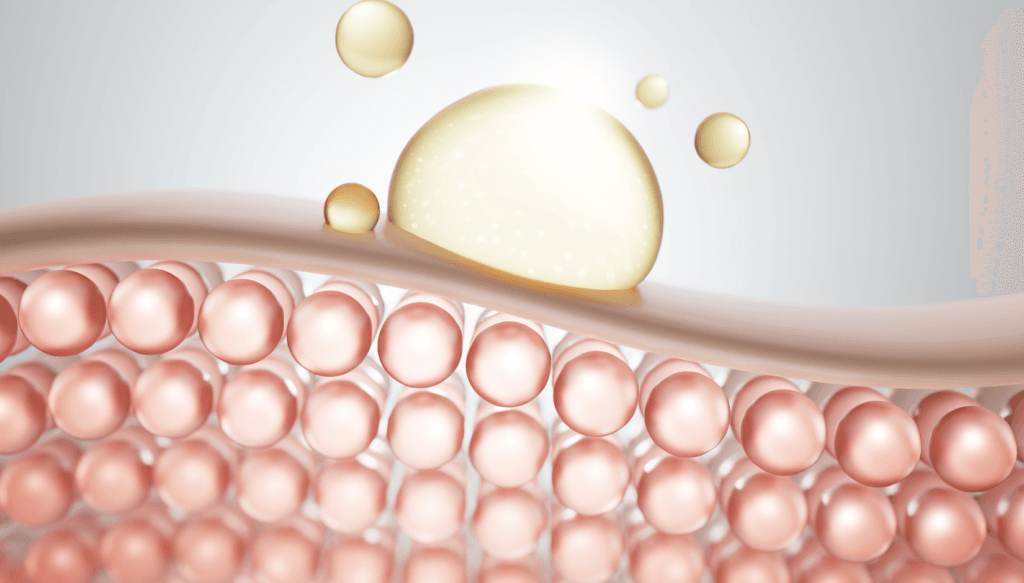
The skin barrier is usually described as the outermost layer of the skin, but that shorthand hides quite a lot of biology. Most of the permeability barrier, the part that limits water loss and regulates the passage of substances between the body and the environment, is concentrated in the stratum corneum at the surface of the epidermis. Its performance depends on flattened corneocytes, the lipids arranged around them, natural moisturizing factor inside them, enzymes, an acidic surface environment and several closely connected biological processes 1, 2.
That matters when we talk about a “damaged skin barrier“. Dryness, tightness, flaking, redness or stinging can accompany impaired barrier function, but none of those signs diagnoses it on its own. Barrier function can also change without the skin suddenly crossing from “healthy” to “damaged”. It shifts along a continuum, and the same visible symptom can arise from irritation, low humidity, dermatitis, an allergic reaction, a treatment side effect or something else entirely.
Repair is similarly easy to oversimplify. Skin has its own barrier-recovery mechanisms. Skincare can reduce continuing stress, limit water loss, improve stratum corneum hydration and, depending on the formulation, supply lipids or other materials that support the environment in which recovery occurs. A moisturizer containing a familiar “barrier ingredient“, however, is not automatically proof that the finished product has clinically demonstrated barrier repair.
What “skin barrier” actually refers to
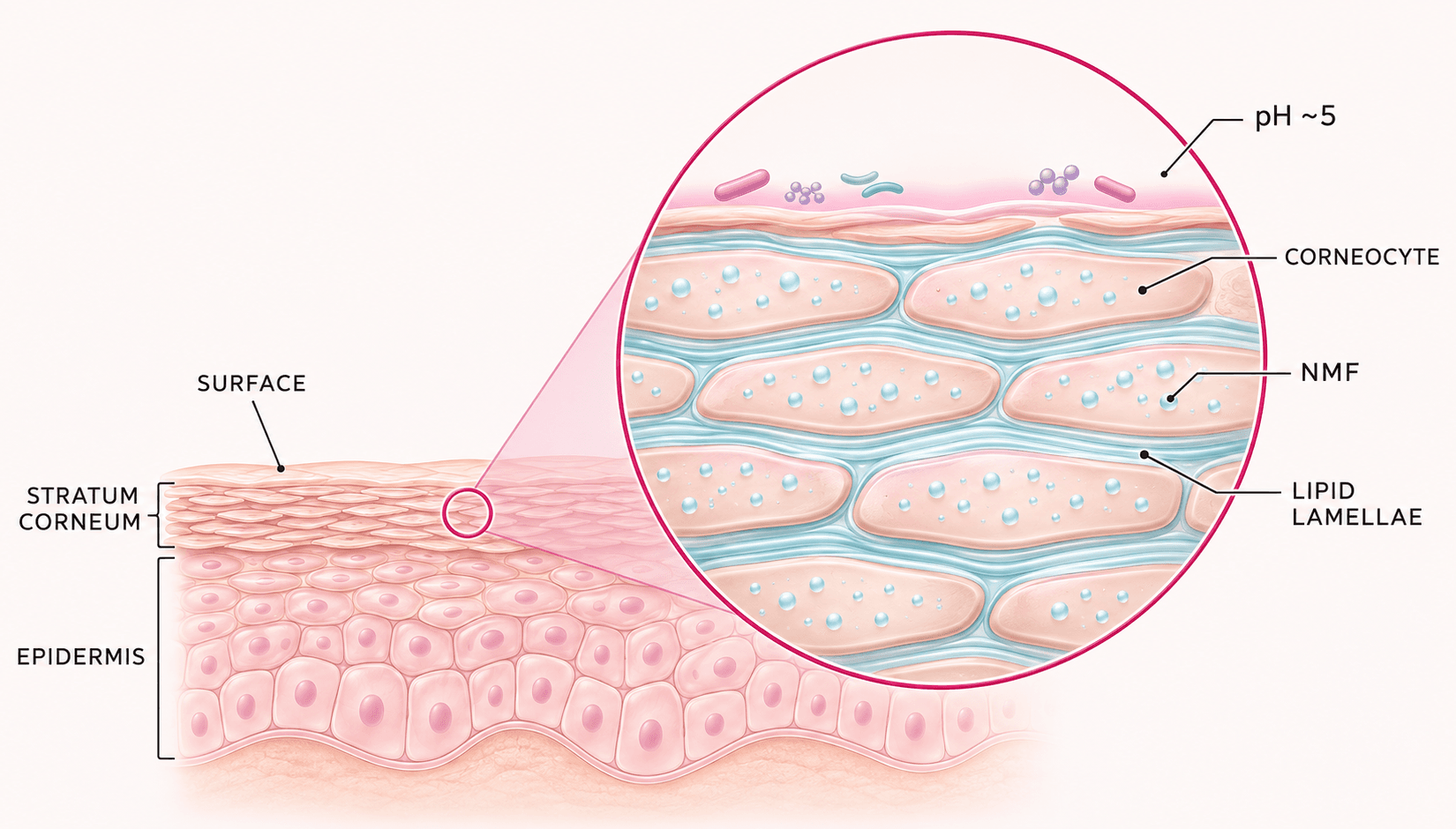
The epidermis contains several layers of cells at different stages of differentiation. At its surface sits the stratum corneum, a relatively thin layer made from corneocytes that have completed that differentiation process and lost their nuclei and most cellular organelles. These cells are surrounded by a specialized extracellular lipid matrix and connected by structures called corneodesmosomes. Together they make the outer surface mechanically resilient while still allowing controlled shedding of corneocytes during normal desquamation 1.
The familiar “bricks and mortar” description is useful up to a point. Corneocytes are the bricks and the extracellular lipids are the mortar. It is a better mental model than thinking of the barrier as an invisible cosmetic coating, but real stratum corneum architecture is considerably more organized than masonry. The lipids are arranged into lamellar structures, while each corneocyte has its own protein envelope and associated lipids. Corneodesmosomes help hold neighboring cells together until enzymatic processes gradually break those connections during shedding 1, 8.
The lipid matrix contains three major classes that appear repeatedly in discussions of barrier care: ceramides, cholesterol and free fatty acids. Their proportions, molecular structures and organization influence permeability. Ceramides themselves are not one molecule but a chemically diverse family, and changes in ceramide composition and chain length have been associated with altered barrier properties in several skin conditions 8, 16. Looking at a label and finding the word Ceramide, therefore, tells you something about the formula but much less about its physical organization once the product is applied.
Inside the corneocytes there is another part of the hydration story. Natural moisturizing factor, usually shortened to NMF, is a mixture of small water-soluble, hygroscopic compounds. Filaggrin breakdown contributes free amino acids and derivatives such as pyrrolidone carboxylic acid and urocanic acid, while the broader NMF mixture also includes substances such as lactate, urea and electrolytes. These materials help corneocytes hold water and participate in the conditions needed for normal stratum corneum maturation and desquamation 3.
This is why “hydration” and “lipids” should not be treated as interchangeable ideas. Water held within corneocytes, the organization of extracellular lipids and the rate at which water escapes through the epidermis describe related parts of the same system, but they are not one measurement.
Skin pH belongs in the same picture
The skin surface is normally acidic. The term acid mantle refers to the buffering environment of the upper stratum corneum rather than to a separate anatomical sheet sitting on top of the skin. This acidic environment affects enzymes involved in lipid processing and desquamation and interacts with microbial ecology and inflammatory processes 4.
The relationship matters because raising skin pH can alter protease activity and lipid-processing enzymes. That does not mean that a cleanser becomes “barrier damaging” simply because its measured pH differs slightly from that of skin, or that pH alone predicts mildness. Surfactant system, concentration, contact time, rinsing, product format and the condition of the skin all change the outcome. A pH number is part of the formulation context, not a complete product assessment.
The microbiome is sometimes presented in consumer skincare diagrams as another barrier layer alongside “the lipid barrier” and “the acid mantle”. Biologically, the relationships are less tidy. Microorganisms living on the skin interact with the chemical and physical environment created by the stratum corneum, while immune and antimicrobial functions are also connected to it. Modern clinical models therefore sometimes describe physical, chemical, microbiological and immunological barrier functions together 2. For a discussion of water loss and topical skincare, though, the permeability function of the stratum corneum remains the most useful place to start.
The barrier controls movement in both directions
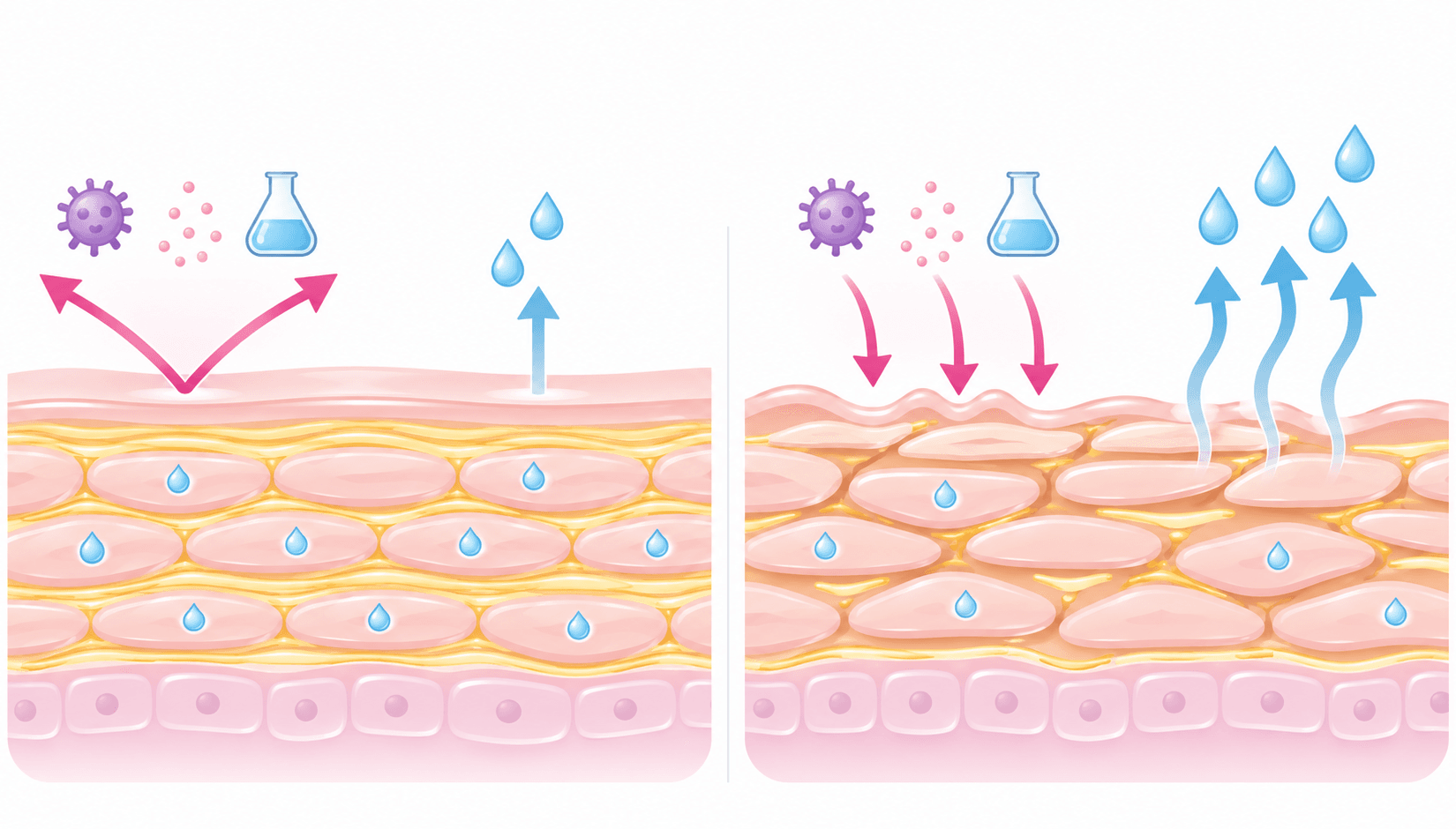
One of the stratum corneum’s defining jobs is limiting the movement of water from the hydrated tissues underneath it into the surrounding environment. Water is continuously moving outward, but an effective permeability barrier keeps that loss within a range compatible with normal skin function. The same structures also influence movement in the opposite direction, restricting the penetration of many external chemicals, irritants, allergens and microorganisms 1, 8.
“Barrier” does not mean impermeable. A completely sealed surface would not describe living skin either. Some substances penetrate more readily than others, and topical formulation science exists partly because molecular size, lipophilicity, vehicle, hydration and other variables can substantially change how a material moves into or across the stratum corneum. Even the same ingredient may behave differently when delivered in two different formulations.
This has an important consequence for skincare interpretation. If a product makes the skin feel softer within minutes, that observation does not tell us that the biological barrier has been “rebuilt”. Surface lubrication, occlusion and increased water content can change feel and appearance quickly. Structural and biochemical recovery can be occurring on a different timescale.
TEWL measures something specific about barrier function
Transepidermal water loss, or TEWL, is one of the most widely used measurements in barrier research. Instruments estimate the flux of water evaporating from the skin surface, usually reported as mass of water lost per unit area over time. When the permeability barrier is experimentally disrupted, TEWL commonly rises, which makes the measurement useful in studies of barrier integrity and recovery 5.
It is tempting to turn this into a consumer rule: higher TEWL equals a damaged barrier. Real measurements need more care. TEWL varies with anatomical site and can be influenced by environmental conditions, acclimatization, temperature, humidity, sweating, the measuring device and the protocol used. Systematic reviews of TEWL instrumentation have also found substantial variation in measurement error between methods 5.
Corneometry and related techniques estimate water content or hydration properties of the stratum corneum. A moisturizer can alter hydration while producing a different pattern in TEWL, and two formulas can affect those measurements differently. Modern studies sometimes add spectroscopy, microscopy, lipid analysis or other techniques because no single number describes the entire barrier.
| Measurement | What it can help assess | What it does not establish by itself |
|---|---|---|
| TEWL | Water flux through the epidermal barrier | Why the value changed or which condition caused it |
| Stratum corneum hydration measurement | Water-related properties of the outer stratum corneum | Complete structural integrity of the barrier |
| Visual assessment | Flaking, erythema, roughness and other visible changes | The biological cause of those changes |
| Sensory report | Tightness, burning, itching or stinging | A specific diagnosis |
This distinction becomes especially important in product testing. If a study reports lower TEWL after use, that is relevant evidence about the measured endpoint. It should not automatically be rewritten into a broader claim about treating sensitive skin, repairing dermatitis or normalizing every component of barrier biology.
What changes when barrier function is impaired
Experimental removal of portions of the stratum corneum with adhesive tape offers a deliberately exaggerated way to study barrier disruption. As successive layers are removed, TEWL increases and the structural profile of the stratum corneum changes. Detergent challenges such as sodium dodecyl sulfate are also used in research because they can reproducibly alter barrier properties and provoke irritation 6, 9.
Daily skincare rarely resembles a laboratory tape-stripping protocol, of course. Barrier impairment outside the laboratory can be much smaller, more gradual and harder to isolate. Repeated cleansing, low humidity, friction, overuse of exfoliating products and irritating topical treatments can all contribute. Skin diseases can change the barrier through their own inflammatory, genetic and biochemical pathways, so the direction of causality is not always “something damaged an otherwise normal wall” 1.
Once permeability function is disturbed, water movement may increase and the balance between lipid processing, hydration, desquamation and inflammatory signaling can shift. The result may be dry or rough skin, flaking, greater sensitivity to some exposures or increased stinging from products that previously felt comfortable. Those observations are useful clues. They remain nonspecific.
Dry, dehydrated and sensitive skin are not synonyms
Beauty vocabulary makes this more confusing because several terms overlap without describing the same thing.
| Term | What it usually describes | Relationship to barrier function |
|---|---|---|
| Dry skin / xerosis | Reduced stratum corneum hydration with roughness or scaling, arising from several possible causes | Frequently associated with altered barrier properties |
| Dehydrated skin | A cosmetic term generally used for low skin water content or temporary tightness | May coexist with barrier impairment, but it is not a formal diagnosis |
| Sensitive skin | Increased unpleasant sensory responses such as stinging or burning to stimuli that may normally be tolerated | Barrier changes can be present, but sensitivity is not defined by TEWL alone |
| Barrier impairment | A functional change in protective/permeability properties | Can occur to different degrees and for different reasons |
| Atopic dermatitis, contact dermatitis and other dermatoses | Clinical conditions with their own diagnostic criteria and mechanisms | Barrier dysfunction can be involved but does not replace the diagnosis |
A person with flaky skin may indeed benefit from a different cleanser and moisturizer. Another person with similar flaking might have irritant contact dermatitis, allergic contact dermatitis, seborrheic dermatitis or another condition. The phrase “damaged barrier” is useful when it describes physiology. It becomes much less useful when it is used as a catch-all diagnosis for every uncomfortable face.
Cleansing can challenge the barrier without making cleansing the enemy
Surfactants allow water to remove oily soils that water alone does not remove efficiently. Their interaction with the stratum corneum varies considerably. Some surfactant systems can extract or disturb components of the outer skin and some surfactant molecules can remain associated with it after rinsing. Formulators can reduce these effects through surfactant choice and combination, concentration, polymers, lipids, pH and other aspects of the finished cleansing system 9.
This is one reason judging a cleanser from a single ingredient is unreliable. Sodium laureth sulfate, sodium cocoyl isethionate, coco-betaine or another surfactant name can tell you which material is present, but not its active concentration, micelle structure, interaction with the other surfactants or final mildness of the cleanser. The same limitation applies more broadly when reading a cosmetic ingredient list: an INCI declaration identifies ingredients, but it does not reconstruct the full finished formula.
Frequency and use matter too. Cleansing several times in close succession, using very hot water, prolonged rubbing and combining cleansing with exfoliation creates a different exposure from a short wash followed by rinsing. When skin is already irritated, even a cleanser that is normally well tolerated may feel uncomfortable.
The practical aim during recovery is therefore less glamorous than shopping for a special “barrier cleanser”. It is to clean the skin as much as necessary without repeatedly adding an avoidable challenge.
Exfoliants and retinoids need context too
Acids, retinoids and other active skincare ingredients are often blamed collectively when someone develops stinging or peeling. They can certainly produce irritation, especially when introduced too quickly or layered into a routine that already contains several potentially irritating treatments. The mechanism and dose matter, though, and irritation should not be translated automatically into permanent barrier damage.
With retinoids, for example, erythema, dryness and scaling can occur during treatment, and formulation, retinoid type, concentration, frequency and individual tolerance all alter the experience. Exfoliating acids likewise differ in acid, concentration, pH, vehicle and use pattern. A low-pH leave-on acid used every night and a rinse-off product containing the same named acid are different exposures.
If irritation appears after adding a new product, reducing or stopping the likely trigger while the skin settles is usually more informative than adding several new “repair” products at once. Changing five things simultaneously makes it difficult to know which product was responsible for the original problem and which new one is helping or irritating further.
Skin starts repairing its permeability barrier itself
Barrier recovery is an active homeostatic process. Experimental disruption stimulates the secretion of lipid-containing lamellar bodies from cells in the upper epidermis and increases epidermal synthesis of cholesterol, fatty acids and sphingolipids needed for the extracellular lipid structures of the stratum corneum 17. The skin is therefore not passively waiting for a topical cream to supply a missing wall.
This changes the way “repair” makes sense in skincare. A moisturizer may reduce water loss through occlusion, increase stratum corneum water content, improve surface flexibility or supply physiologic lipids. Those effects can create better conditions while endogenous recovery continues. They are not all the same biological action.
The extent and cause of the disruption also matter. Recovery from a controlled laboratory perturbation of healthy skin cannot simply be used as a timetable for dermatitis, an allergic reaction or chronically irritated skin. Those situations can include ongoing inflammation or continued exposure to the trigger.
There is no universal skin barrier repair timeline
Search for a repair time and you will find surprisingly precise answers: a few days, two weeks, four weeks, sometimes six or eight. The problem is that “repaired” has not been defined consistently in those statements.
A human facial-skin study makes the difficulty visible. Researchers used sequential tape stripping on the cheek and then followed several parameters during recovery. Some changes were already moving toward baseline after 24 hours 6. In the longer follow-up, lipid and sebum-related surface components had recovered within 24 hours, protein and water-associated measures recovered after about one week, while TEWL and corneocyte size returned to baseline by four weeks 7.
Those results do not mean that every irritated face requires four weeks to heal. They show almost the opposite: different components measured after one particular form of experimental disruption recovered on different schedules.
A useful repair timeline has to ask what happened to the skin and what endpoint we are waiting for. Comfort can improve before an instrumental measurement normalizes. Visible flaking may disappear while an inflammatory condition is still active. A temporary reaction to over-cleansing is not equivalent to atopic dermatitis. The body site matters as well, since barrier properties differ between facial and forearm skin and across other anatomical sites 1.
What skincare can realistically do while the barrier recovers
The first useful step is often to remove a continuing source of stress. If stinging started after increasing an exfoliating acid from twice weekly to every night, adding three serums while continuing the nightly acid makes the situation harder to interpret. If the trigger is unknown, a simpler routine reduces the number of exposures rather than pretending to identify the cause.
Cleansing can then be adjusted to what is actually needed. Someone wearing water-resistant sunscreen or makeup still needs effective removal, but more aggressive cleansing is not automatically better cleansing. Someone with very dry skin may not need the same morning cleansing routine as someone with high sebum production. There is no universal barrier-repair cleanser format.
Moisturizers are particularly useful because a single finished formula can combine several mechanisms. Humectant ingredients increase water retention within the stratum corneum. Occlusive materials reduce evaporation from the surface. Emollients fill spaces between superficial corneocytes and change flexibility, smoothness and feel. These categories overlap in practice, and many materials have more than one relevant property 2.
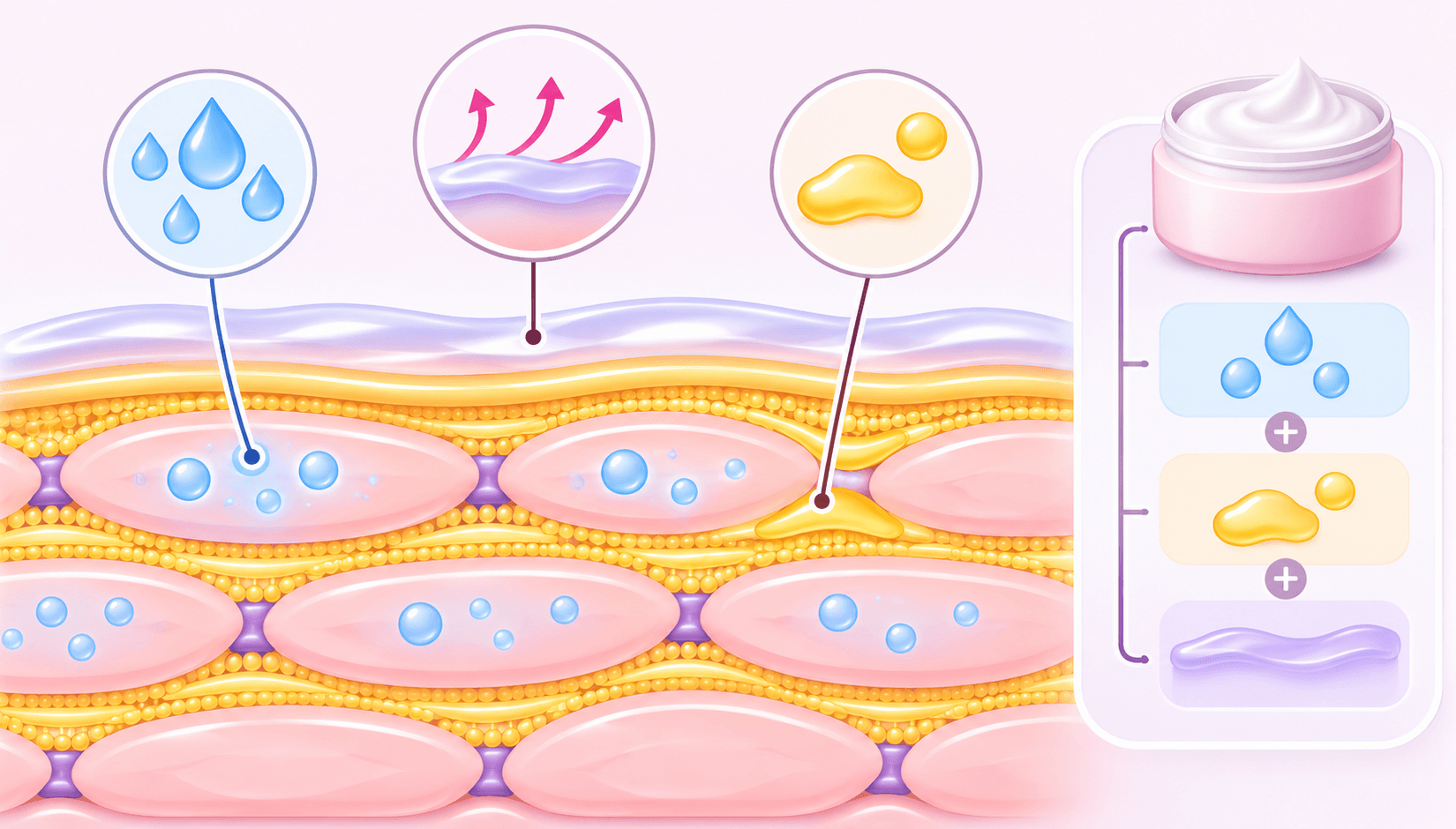
A cream or ointment also provides a vehicle. That vehicle changes spreading, persistence, water content, evaporation, delivery and the way individual ingredients interact with the stratum corneum. The finished emulsion matters, which is why identifying glycerin, petrolatum or a ceramide in the ingredient list is not equivalent to knowing the final magnitude of the product’s effect.
Ceramides are part of the story, not the whole formula
Ceramides deserve their reputation as barrier lipids. They form a large and structurally important part of the stratum corneum lipid matrix alongside cholesterol and free fatty acids, and altered ceramide composition has been documented in barrier-associated skin disorders 8, 16.
Cosmetic interpretation often skips a step. A product contains Ceramide NP, Ceramide AP or another declared ceramide, therefore the product “rebuilds the barrier”. The first statement can be established from the current ingredient list. The second requires much more information.
A 2024 review of ceramide formulation illustrates why. Ceramides are difficult materials to formulate because their physical organization and solubility matter. The authors reported that improperly dissolved ceramides could produce counterproductive results in experimental barrier models, while appropriately formulated systems performed differently 8. The finding does not tell us that ceramide creams are ineffective. It tells us that the word ceramide on a label cannot substitute for formulation work.
Ratio is another subject that is easy to oversell. Ceramides, cholesterol and free fatty acids coexist physiologically, which has led to research on topical mixtures designed around those lipid families. That does not turn one fixed ratio into a universal rule for every cosmetic moisturizer, every skin condition or every delivery system. Finished-product evidence remains more informative than trying to reverse-engineer lipid architecture from the ingredient list.
Glycerin, petrolatum, urea, panthenol and niacinamide are doing different things
“Best barrier ingredients” lists tend to place very different materials into one bucket. It is more useful to ask what each ingredient is capable of contributing within a formula.
| Ingredient or family | Relevant role | What its presence in an INCI list establishes |
|---|---|---|
| Glycerin | Humectancy, improved stratum corneum hydration and effects on water handling | Glycerin is present, not how much hydration the finished product will produce |
| Petrolatum | Strong occlusion and reduction of water evaporation from the surface | An occlusive material is present, not whether the entire product suits every skin type |
| Ceramides | Components related to the physiological extracellular lipid matrix | The declared ceramide is present, not that correct lipid organization or clinical barrier repair has been demonstrated |
| Cholesterol and fatty acids | Components of the physiological lipid matrix and possible parts of barrier-directed formulations | Formula composition, not the physical arrangement of those lipids after application |
| Urea | A hygroscopic NMF component at lower concentrations; at higher concentrations it also has increasingly keratolytic effects | Urea is present, while concentration and vehicle are still needed to interpret its likely role |
| Panthenol / dexpanthenol | Used in moisturizing and soothing formulations; finished formulations have shown hydration and barrier-related effects in controlled studies | Ingredient presence alone does not reproduce the evidence for the tested finished formula |
| Niacinamide | Multiple cutaneous effects, with evidence relevant to epidermal differentiation, lipids and barrier-related endpoints | Niacinamide is present, but dose, vehicle and finished-product performance remain unknown |
Glycerin is a good example of why the “lipid replacement” story is incomplete. It is not a ceramide and does not need to resemble the extracellular lipid matrix to be useful. Research has linked topical glycerol with increased stratum corneum hydration and several changes relevant to barrier function 10.
Urea requires even more context. It is naturally present in NMF and is used in topical formulations across a wide range of concentrations. Reviews distinguish lower-concentration moisturizing uses from progressively more keratolytic applications at higher concentrations 11. Saying simply that “urea repairs the barrier” removes precisely the concentration information needed to understand what a urea product is designed to do.
Panthenol evidence also illustrates the ingredient-versus-product problem. Randomized studies of a specific panthenol-containing emollient reported improvements in hydration, TEWL and lipid-lamella measurements after a controlled detergent challenge 12. Those data belong to the tested formulation. They should not be converted into a guarantee that every cosmetic containing panthenol will reproduce the same effect.
Niacinamide has an even broader evidence base and is used for several cosmetic purposes. Reviews describe experimental and clinical evidence relevant to epidermal barrier function, among other effects 13. Once again, a niacinamide name buried somewhere in an INCI declaration does not disclose concentration, delivery, study design or the magnitude of effect in that particular moisturizer. Even ingredient order has limits as a concentration clue, as explained in our guide to the 1% rule in cosmetic ingredient lists.
What does “barrier repair” on a moisturizer actually mean?
There are several levels of evidence that can sit behind a barrier claim, and they should not be treated as equivalent.
At the most basic level, a formula may contain ingredients with known relationships to stratum corneum hydration or barrier lipids. That makes a mechanism plausible. It does not demonstrate the performance of the finished product.
A stronger level of evidence tests the formulation itself. Instrumental studies might measure TEWL, stratum corneum hydration, skin surface pH or another predefined endpoint before and after use. A well-designed comparison can establish something useful about that product under the conditions studied, although one instrumental endpoint still does not prove every possible interpretation of the words repair, strengthen or restore.
Clinical assessments can add other outcomes such as scaling, dryness, erythema or participant-reported symptoms. Here too, study population matters. Results from healthy volunteers after an experimental detergent challenge cannot be transferred automatically to people with eczema. Results on forearm skin are not necessarily identical to facial use. Duration and comparator matter. So does whether the study tested the commercial formula actually being sold.
This hierarchy is also relevant to cosmetic claims regulation. In the European Union, cosmetic claims must be supported by adequate and verifiable evidence, and the common criteria specifically address extrapolating an ingredient’s properties to a finished product 14. A brand cannot simply take evidence about an ingredient and assume that the final cosmetic has exactly the same demonstrated performance.
The United States draws the regulatory boundary differently. Moisturizing is a cosmetic purpose, but FDA states that claims intended to treat or prevent disease, or to affect the structure or function of the body, can change a product’s regulatory status 15. The wording and intended use therefore matter. “Barrier repair” is not a phrase that should be interpreted identically across every market without reading the actual claim and context.
For someone comparing two moisturizers, the practical hierarchy is straightforward. The INCI list can show whether glycerin, petrolatum, ceramides, cholesterol, fatty acids, urea, panthenol or niacinamide are declared. Product documentation may reveal concentrations or testing. A published study of the finished formulation can tell us considerably more. The ingredient list alone cannot collapse those levels into one answer.
A temporary barrier-friendly routine does not need many steps
When skin has become irritated after a complicated routine, simplification has a practical advantage: it reduces exposure while making cause and effect easier to follow.
In the morning, cleansing can be limited to what the skin and previous night’s products actually require. A moisturizer can then address hydration and water loss according to how dry or uncomfortable the skin is. Sunscreen remains relevant during the day because “barrier recovery” is not a reason to abandon photoprotection.
In the evening, remove sunscreen, makeup and surface soil with the least aggressive cleansing approach that still works. Follow with a moisturizer that feels comfortable and does not sting. A more occlusive formula can be useful for very dry areas, although more occlusion is not automatically better for every person or every facial skin condition.
The routine does not require a serum in each mechanistic category. A single well-formulated moisturizer may already contain water, humectants, emollients, occlusive materials and physiologic lipids. Adding multiple products marketed around the same “barrier” concept can increase the number of fragrances, botanical extracts, preservatives and active ingredients encountered without necessarily adding a new function.
When to bring exfoliants and retinoids back
There is no evidence-based calendar saying that an exfoliant must be restarted on day seven or a retinoid on day fourteen. The cause and severity of the original reaction have to come first.
If an optional cosmetic active clearly coincided with burning, marked dryness or peeling, it is reasonable to leave it out while those signs settle. Reintroduction can then be gradual, ideally changing one variable at a time. That makes recurrence easier to interpret.
Concentration and frequency are not interchangeable. Applying the same leave-on product twice a week and every night produces different cumulative exposure, while using a lower concentration more frequently may or may not be better tolerated depending on the ingredient and formulation. Retinoid form, acid type, pH and vehicle can all matter.
Persistent reactions also change the question. Repeatedly stopping and restarting a product that reliably causes dermatitis is not “training the barrier”. It may simply be repeated exposure to something the skin does not tolerate.
When “barrier repair” is not enough
Barrier-support skincare is useful for ordinary dryness and for reducing unnecessary stress on irritated skin, but it cannot determine why a rash is present. Atopic dermatitis, allergic contact dermatitis, irritant contact dermatitis, rosacea, psoriasis, infections and other conditions can include changes in barrier function while requiring very different management.
A reaction that persists despite removing likely irritants, repeatedly returns in the same pattern, spreads, becomes markedly painful, produces swelling, fissures, crusting or oozing, or involves the eyes deserves assessment rather than another round of barrier products. Known or suspected contact allergy is another reason to look beyond generic “sensitive skin” advice, since the relevant task becomes identifying and avoiding the trigger.
The same boundary applies when a cosmetic is being used alongside prescribed treatment. Moisturizers may be useful supportive products in several dermatological conditions, but they do not replace diagnosis or prescribed therapy.
References
- Fluhr JW, Moore DJ, Lane ME, Lachmann N, Rawlings AV. Epidermal barrier function in dry, flaky and sensitive skin: a narrative review. Journal of the European Academy of Dermatology and Venereology. 2024;38(5):812-820. DOI 10.1111/jdv.19745
- Rajkumar J, Chandan N, Lio P, Shi V. The skin barrier and moisturization: function, disruption, and mechanisms of repair. Skin Pharmacology and Physiology. 2023;36(4):174-185. DOI 10.1159/000534136
- Kezic S, Jakasa I. Filaggrin and skin barrier function. Current Problems in Dermatology. 2016;49:1-7. DOI 10.1159/000441539
- Brooks SG, Mahmoud RH, Lin RR, Fluhr JW, Yosipovitch G. The skin acid mantle: an update on skin pH. Journal of Investigative Dermatology. 2025;145(3):509-521. DOI 10.1016/j.jid.2024.07.009
- Klotz T, Ibrahim A, Maddern G, Caplash Y, Wagstaff M. Devices measuring transepidermal water loss: a systematic review of measurement properties. Skin Research and Technology. 2022;28(4):497-539. DOI 10.1111/srt.13159
- Gorcea M, Hadgraft J, Moore DJ, Lane ME. In vivo barrier challenge and initial recovery in human facial skin. Skin Research and Technology. 2013;19(1):e375-e382. DOI 10.1111/j.1600-0846.2012.00654.x
- Gorcea M, Hadgraft J, Lane ME, Moore DJ. In vivo barrier challenge and long-term recovery in human facial skin. International Journal of Cosmetic Science. 2013;35(3):250-256. DOI 10.1111/ics.12034
- Schild J, Kalvodová A, Zbytovská J, Farwick M, Pyko C. The role of ceramides in skin barrier function and the importance of their correct formulation for skincare applications. International Journal of Cosmetic Science. 2024;46(4):526-543. DOI 10.1111/ics.12972
- Mijaljica D, Spada F, Harrison IP. Skin cleansing without or with compromise: soaps and syndets. Molecules. 2022;27(6):2010. DOI 10.3390/molecules27062010
- Fluhr JW, Darlenski R, Surber C. Glycerol and the skin: holistic approach to its origin and functions. British Journal of Dermatology. 2008;159(1):23-34. DOI 10.1111/j.1365-2133.2008.08643.x
- Piquero-Casals J, Morgado-Carrasco D, Granger C, Trullàs C, Jesús-Silva A, Krutmann J. Urea in dermatology: a review of its emollient, moisturizing, keratolytic, skin barrier enhancing and antimicrobial properties. Dermatology and Therapy. 2021;11(6):1905-1915. DOI 10.1007/s13555-021-00611-y
- Stettler H, Kurka P, Lunau N, et al. A new topical panthenol-containing emollient: results from two randomized controlled studies assessing its skin moisturization and barrier restoration potential, and the effect on skin microflora. Journal of Dermatological Treatment. 2017;28(2):173-180. DOI 10.1080/09546634.2016.1214235
- Ong RR, Goh CF. Niacinamide: a review on dermal delivery strategies and clinical evidence. Drug Delivery and Translational Research. 2024;14(12):3512-3548. DOI 10.1007/s13346-024-01593-y
- European Commission. Commission Regulation (EU) No 655/2013 laying down common criteria for the justification of claims used in relation to cosmetic products. 2013.
- U.S. Food and Drug Administration. Cosmetics labeling claims; Is it a cosmetic, a drug, or both? (Or is it soap?). Accessed October 2026.
- Wertz PW, Fluhr JW. Ceramides and the defective barrier in atopic dermatitis. Skin Pharmacology and Physiology. Published online July 29, 2026. DOI 10.1159/spp/aetag001. PMID 42525582
- Feingold KR. Thematic review series: skin lipids. The role of epidermal lipids in cutaneous permeability barrier homeostasis. Journal of Lipid Research. 2007;48(12):2531-2546. DOI 10.1194/jlr.R700013-JLR200